


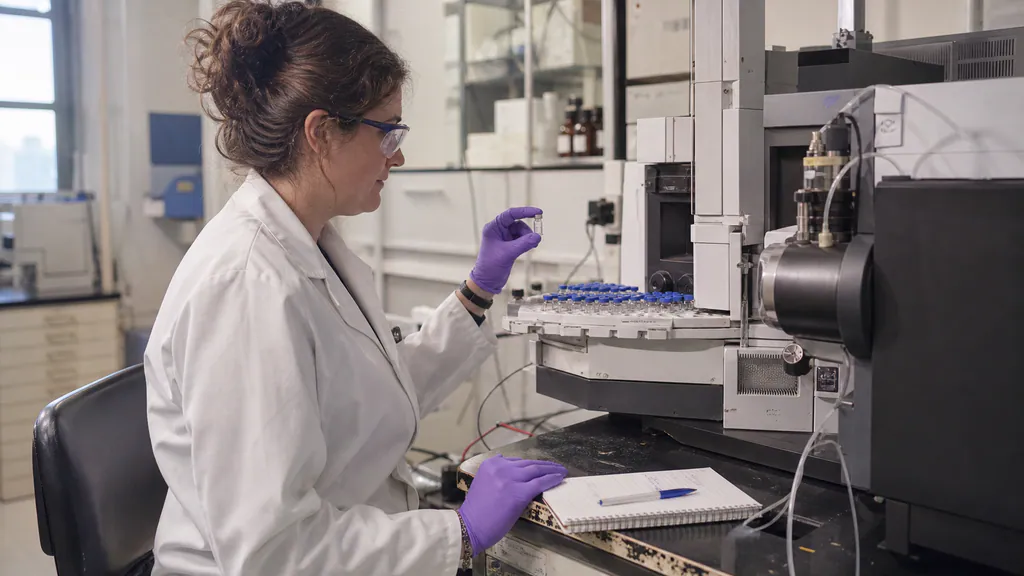
Peptide quality testing is the process of proving that the material in a specific batch matches a defined specification for identity, purity, content, impurities, physical properties, microbiological attributes, and stability.
No single test proves all of that.
HPLC can describe a chromatographic purity profile. Mass spectrometry can support molecular identity. A quantitative assay can estimate peptide content. Karl Fischer testing can measure water. Gas chromatography can address specified residual solvents. Sterility and bacterial-endotoxin methods answer separate microbiological questions. Stability studies determine whether the specification remains valid through the proposed storage period.
The best peptide quality program therefore starts with a question, not a machine: what must be true about this material for the intended research use?
This complete guide explains how a buyer can turn that question into a test panel, review a peptide Certificate of Analysis, compare suppliers, and avoid the most common interpretation errors. Certiva supplies peptide materials for laboratory research use only. Nothing in this guide is a recommendation for human use, administration, treatment, or dosing.
What does peptide quality mean?
Quality means conformance to predefined requirements. It does not mean “the highest number on the report,” and it is not a synonym for purity.
A useful peptide specification can include several quality attributes:
- Identity: the material is the intended peptide and chemical form.
- Purity: peptide-related and other detected impurities are controlled.
- Content or assay: the amount of target peptide is within the agreed range.
- Physical properties: appearance, solubility, pH, water, or other relevant characteristics meet the requirement.
- Process-related residues: solvents, reagents, counterions, metals, or other specified residues are controlled where applicable.
- Microbiological attributes: bioburden, specified organisms, sterility, or endotoxin requirements are met when the intended use calls for them.
- Packaging and stability: the container, storage statement, retest date, and shipping conditions are supported and controlled.
- Traceability: every result belongs to the exact sample and batch offered.
The word specification is crucial. A test result has little purchasing value until the buyer knows the acceptance criterion. “HPLC tested” only says an analysis may have occurred. “HPLC purity 99.4%, specification not less than 98.0%, Batch P260730-01” can be evaluated.
FDA’s Q7 guidance uses this same quality-system logic for active pharmaceutical ingredients: materials are purchased against agreed specifications, appropriate laboratory tests determine conformance, and authentic COAs identify the batch, tests, acceptance limits, and numerical results. Research materials do not become approved drugs by citing Q7, but the documentation principles are highly useful for serious B2B procurement.
The peptide quality testing map
The fastest way to understand a peptide report is to map each quality question to a method.
| Quality attribute | Typical technique or record | Main question answered | Common misinterpretation |
|---|---|---|---|
| Identity | MS, LC-MS, HRMS, sequence or orthogonal method | Is the expected peptide present? | “Matching mass proves complete purity.” |
| Chromatographic purity | RP-HPLC, HPLC or UPLC | What is the detected main-peak/impurity profile? | “99% HPLC means 99% of the vial is peptide.” |
| Content / assay | Quantitative chromatographic or other suitable assay | How much target peptide is present? | “Purity percentage equals vial fill.” |
| Water | Karl Fischer or suitable loss-on-drying approach | How much water is present? | “Lyophilized means water-free.” |
| Residual solvents | GC or suitable method | Are specified solvents controlled? | “HPLC sees every process residue.” |
| Counterion / inorganic content | Ion chromatography, titration or suitable elemental method | What salt/counterion or inorganic residue is present? | “Free base and acetate are interchangeable.” |
| Appearance / solubility | Visual and defined laboratory procedures | Does the material meet physical requirements? | “Appearance proves chemical identity.” |
| Bioburden / microbial limits | Microbiological enumeration or specified-organism methods | What viable microbial burden is detected? | “No visible growth means sterile.” |
| Sterility | Applicable sterility method | Are viable organisms recovered under the test? | “Sterility proves low endotoxin.” |
| Bacterial endotoxins | BET under an applicable method | Is endotoxin within the specified limit? | “Endotoxin testing proves sterility.” |
| Stability | Time-point studies under defined conditions | Does the batch remain within specification? | “A release COA proves a two-year shelf life.” |
| Batch traceability | COA, label, sample and chain-of-custody records | Do the results belong to this order? | “A generic COA proves every batch.” |
This map prevents the most expensive quality mistake: asking one test to answer a question it was not designed to answer.
Step 1: Define the intended research use
A test panel should begin with a written intended use. That use determines which attributes are critical.
Consider four hypothetical research projects:
- An analytical team needs a peptide reference to develop an LC-MS method.
- A cell-biology group needs material for a sensitive in-vitro assay.
- A formulation team needs a lyophilized blend with a defined component ratio.
- A distributor needs repeatable private-label batches with agreed packaging and storage documentation.
All four may buy a peptide with the same familiar name, but they do not have the same quality target.
The analytical team may prioritize identity, purity, known related substances, and assigned content. The cell-biology group may add a project-specific endotoxin or microbial limit because contaminants could distort the experimental response. The formulation team needs component-specific identity and content plus blend uniformity. The distributor needs those scientific attributes plus label control, packaging traceability, change notification, and stability support.
Write the use in operational language:
Lyophilized peptide reference material for non-clinical laboratory assay development. Required attributes: confirmed identity, chromatographic purity, assigned content, water, current-batch traceability, and storage information.
That sentence is more useful than “best quality peptide.”
Step 2: Identify the exact peptide material
Peptide names are often used too loosely. The specification should identify the actual material being purchased.
Record:
- full peptide name;
- amino-acid sequence when appropriate;
- terminal modifications;
- disulfide status where relevant;
- isotope or other labeling;
- free base, acetate, trifluoroacetate, or other form;
- molecular formula and expected molecular mass where available;
- raw bulk, lyophilized vial, solution, or blend;
- nominal amount or concentration;
- excipients or formulation components;
- packaging configuration; and
- research-use-only status.
This level of detail matters because two materials can share a common shorthand but differ chemically or functionally. A missing terminal modification changes the expected mass. A free base and acetate form differ in counterion content. A single-peptide reference and a fixed blend require different identity and content strategies.
The July 2026 FDA advisory meeting repeatedly separated free-base and acetate forms of BPC-157, KPV, TB-500, MOTS-c, Emideltide, Epitalon, and Semax. Whatever the regulatory setting, the technical lesson is simple: the form is part of the material identity.
How is peptide identity tested?
Identity testing supports that the expected molecule is present. For synthetic peptides, mass spectrometry is a common starting point.
Mass spectrometry
Mass spectrometry measures ions according to mass-to-charge ratio. Peptides often produce several charge states, so the spectrum may show multiple signals that are deconvoluted to an expected molecular mass.
A useful identity record should connect:
- sample name and batch;
- expected mass;
- observed mass or deconvoluted result;
- method or instrument description;
- interpretation or acceptance criterion; and
- the underlying spectrum when risk warrants review.
A close mass match is strong evidence, but it has boundaries. Different sequences can sometimes share the same nominal mass. Isomers and certain structural variants may not be resolved by a basic intact-mass measurement. Complex or critical projects may therefore use additional evidence.
LC-MS
Liquid chromatography coupled to mass spectrometry adds separation before mass detection. It can connect a chromatographic peak with mass information and may help investigate peptide-related impurities.
LC-MS is still not a universal replacement for a validated quantitative purity method. The reporting objective should be clear: identity confirmation, impurity identification, or quantitative analysis.
High-resolution mass spectrometry
High-resolution MS can provide more precise mass measurement and support elemental composition assignments. It can be useful when the distinction between closely related species matters.
Peptide mapping, sequencing, and amino-acid analysis
Longer, modified, folded, or higher-risk peptides may need orthogonal identity evidence. Depending on the material, this can include fragmentation analysis, peptide mapping, amino-acid composition, sequencing, disulfide mapping, or another structural method.
The method should fit the ambiguity. A simple short peptide with a distinctive mass may need a different strategy from a long peptide containing several modifications and disulfide bonds.
Why HPLC retention time alone is weak identity evidence
Retention time can support identity when a sample and qualified reference are run under the same controlled method. But co-elution is possible, and retention time is influenced by method conditions. A single peak appearing at an expected time is not as specific as orthogonal molecular evidence.
For a buyer-friendly explanation, see HPLC vs mass spectrometry for peptides.
How is peptide purity tested by HPLC?
Reversed-phase HPLC is widely used for peptide purity because it separates components according to their interaction with a stationary phase and mobile-phase gradient.
The laboratory injects a prepared sample, components elute at different times, and a detector records peaks. The main peak area is commonly reported as a percentage of total integrated peak area under the method.
What a peptide HPLC result can tell you
A well-designed method can show:
- the relative size of the main detected component;
- the number and size of separated impurity peaks;
- whether the batch meets an agreed chromatographic-purity limit;
- whether the profile resembles qualified historical batches; and
- changes during stability or stress studies.
What HPLC purity does not tell you by itself
It does not independently prove:
- the main peak is the intended peptide;
- the vial contains the labeled peptide mass;
- every possible impurity is detected;
- the material is sterile;
- the endotoxin level is acceptable;
- the material will remain stable; or
- the tested sample represents the batch being sold.
Those limitations do not make HPLC weak. They make it specific.
Method conditions that affect the result
When comparing two HPLC reports, examine:
- column chemistry and dimensions;
- particle size;
- mobile phases and additives;
- gradient program;
- flow rate;
- temperature;
- detector type and wavelength;
- injection amount;
- integration rules;
- reporting threshold;
- run time; and
- system-suitability criteria.
A short method may fail to separate late-eluting or closely related impurities. A detector wavelength may respond differently to components. Aggressive integration can hide shoulders or merge peaks. Different reporting thresholds change which small peaks enter the calculation.
This is why “Supplier A reports 99.7% and Supplier B reports 99.2%” is not enough to rank the suppliers. The methods, samples, and uncertainty may differ more than the displayed decimals suggest.
Chromatogram review
For important orders, review the chromatogram rather than the summary percentage alone. Check:
- sample and sequence identifiers;
- axis labels and run time;
- peak table;
- main-peak retention time;
- integration boundaries;
- unresolved shoulders;
- blank or reference runs where provided;
- system-suitability result; and
- consistency between the chromatogram and COA.
A chromatogram is not automatically trustworthy because it looks technical. Traceability and method context still matter.
Peptide purity vs peptide content
Purity and content answer different questions.
Chromatographic purity is usually a relative peak-area measure. Content or assay estimates the amount of target peptide in the sample, vial, or solution.
Suppose two lyophilized samples both show 99% HPLC purity. One contains 9.8 mg of target peptide per nominal 10 mg vial. The other contains 7.9 mg because the solid also includes more water and counterion or because fill content is low. The purity numbers can look identical while the usable target amount differs.
Content methods may use:
- a quantitative HPLC method with an assigned reference standard;
- amino-acid analysis;
- elemental or nitrogen approaches in specific contexts;
- quantitative NMR in suitable cases;
- mass-balance calculations supported by water, counterion, and impurity results; or
- another validated or qualified method appropriate to the material.
The COA should make the basis clear. Terms such as “peptide content,” “assay,” “net peptide content,” “as is,” “anhydrous,” or “on a dry basis” are not automatically interchangeable.
Nominal fill is not an analytical result
A production instruction saying “fill 10 mg” is a manufacturing target. A label saying “10 mg” is a claim. A gravimetric record can show how much total material was dispensed. None of those, alone, necessarily measures target peptide content.
For blend products, total nominal fill is even easier to misread. A 20 mg BPC-157 + TB-500 blend might be defined as 10 mg of each component. Testing only the total solid mass does not verify that ratio.
Peptide-related impurities
Synthetic peptide production can generate related species. The relevant impurities depend on the sequence, chemistry, process, purification, handling, and storage.
Potential peptide-related impurities include:
- deletion sequences;
- truncated sequences;
- insertion or duplicated residues;
- incompletely deprotected species;
- oxidized residues;
- deamidated species;
- hydrolysis products;
- epimers or racemized residues;
- disulfide variants;
- aggregates;
- adducts;
- counterion variants; and
- degradation products formed during storage.
Not every impurity is equally likely or equally detectable by the same method. Process knowledge should guide the analytical strategy.
Why total purity can hide impurity identity
Two batches can both report 99.0% purity while containing different 1.0% impurity profiles. One may have several very small related peaks. Another may have one dominant impurity. If a specific impurity matters to the research, total purity alone is insufficient.
An advanced specification can include:
- main-peak purity;
- any single impurity limit;
- total impurities limit;
- specified impurity limits; and
- reporting or identification thresholds.
For a routine RUO reference, the scope may be simpler. The key is to avoid implying that one total area number is complete impurity characterization.
Process-related residues and physical attributes
Peptide quality extends beyond peptide-related peaks.
Water
Lyophilized does not mean water-free. Residual water can influence total content, appearance, reconstitution behavior, and degradation. Karl Fischer titration is a common water method.
The specification should state the method and limit. A water result can also help explain why net peptide content differs from total solid mass.
Residual solvents
Solvents used during synthesis, cleavage, purification, or processing may require control. Gas chromatography is commonly used for volatile residual solvents.
The target solvent list should follow process knowledge and the intended material specification. A generic “residual solvents pass” line without named analytes, limits, or method may be difficult to evaluate.
Counterions
Peptides may be isolated as acetate, trifluoroacetate, or another form. Counterion content contributes mass and can affect comparability, formulation, and analytical calculations.
Ask:
- which counterion is intended;
- which method confirms or quantifies it;
- whether content is reported on an as-is or corrected basis; and
- whether supplier changes require notification.
Inorganic impurities and metals
Reagents, catalysts, equipment, water, or other process inputs can introduce inorganic residues. The need for testing and the target elements should follow process knowledge and risk.
Appearance
Appearance is a basic but useful release attribute when defined. “White to off-white lyophilized cake” is more controlled than “looks fine.” Appearance can flag obvious changes, but it cannot establish identity or purity.
Solubility and solution appearance
A research protocol may require a defined solvent, concentration, dissolution time, or solution-clarity observation. These conditions should be written because peptide solubility can be sequence- and pH-dependent.
Do not turn a laboratory solubility procedure into administration instructions. The purpose here is analytical and research handling.
Sterility, bioburden, and bacterial endotoxins
These terms are often grouped together even though they answer different questions.
Bioburden or microbial limits
Bioburden testing estimates viable microorganisms present before a sterilization step or within a non-sterile material specification. Microbial-limit testing may include counts and tests for specified organisms.
Sterility
A sterility test assesses whether viable microorganisms are recovered under the
specified method and conditions. USP <71> is a recognized compendial framework.
A test result is only one part of sterility assurance. For an actual sterile product, facility controls, aseptic processing or sterilization validation, environmental monitoring, packaging, and container-closure integrity also matter.
Bacterial endotoxins
Endotoxins are associated with Gram-negative bacterial outer membranes. Endotoxin may remain even when viable bacteria are no longer present. A bacterial-endotoxins test therefore does not duplicate a sterility test.
FDA’s March 2026 guidance discusses USP <85>, USP <161>, AAMI ST72, and
appropriate test approaches and controls. USP <86> adds recombinant-reagent
methods.
Do all research peptides need these tests?
No. The intended research use determines relevance. A non-sterile analytical reference may not need a sterile-product test panel. A cell assay may define an endotoxin limit to reduce experimental interference. A specific microbiology project may have another requirement.
Most importantly, adding sterility or endotoxin testing to an RUO COA does not make the material a medicine or establish suitability for human administration.
Read peptide purity vs sterility vs endotoxin for a focused explanation of these boundaries.
Testing peptide blends
Blends require more than copying the test panel for one peptide.
A fixed-composition blend specification should address:
- identity of each component;
- content or ratio of each component;
- total fill or concentration;
- blend uniformity where relevant;
- chromatographic separation of components and related impurities;
- excipients or other formulation materials;
- compatibility and stability; and
- batch traceability.
Why a single HPLC percentage can be misleading for a blend
If two peptides co-elute or the method is optimized for only one component, a total purity number may not show whether each component meets its own requirement.
Ask whether the method:
- resolves both target peptides;
- assigns each peak;
- quantifies each component;
- accounts for detector-response differences;
- detects relevant degradation products; and
- has been shown suitable for the blend matrix.
Component ratio
A label such as “10 mg + 10 mg” makes two content claims, not merely one 20 mg claim. The laboratory strategy should support both where ratio accuracy is a critical requirement.
Blend stability
Two individually stable peptides may behave differently when combined. Shared moisture, pH, excipients, or degradation products can influence the mixture. Stability evidence for each separate peptide does not automatically establish the blend’s retest period.
Method validation, verification, and fitness for purpose
An instrument can produce a number even when the method is unsuitable. Quality comes from showing that the analytical procedure is capable of its intended task.
FDA’s analytical-method guidance and ICH Q2(R2) describe validation principles. The characteristics considered depend on the method’s purpose and may include:
- specificity or selectivity;
- accuracy;
- precision;
- repeatability;
- intermediate precision;
- range;
- linearity or response model;
- detection limit;
- quantitation limit;
- robustness; and
- system suitability.
Validation is tied to intended use
An identity method is evaluated differently from a quantitative assay. A limit test has different needs from a method that reports exact content. A stability-indicating method must distinguish the target from relevant degradation products.
Method transfer and verification
When a method moves to a new laboratory, instrument, column, or analyst group, the receiving site should demonstrate that it can perform the method as intended. “Validated somewhere” is not always enough.
Compendial methods
A compendial method can provide a recognized framework, but the laboratory still needs to address suitability for the actual sample and conditions. Matrix interference does not disappear because the method has a chapter number.
Research-stage methods
Not every early research material needs a full drug-application validation package. The degree of qualification should reflect risk, intended use, and decision importance. The report should avoid overstating what a screening or development method proves.
Sampling: the hidden part of every test
The best analytical method only describes the sample placed into it. If the sample does not represent the batch, the result can mislead.
Sampling questions include:
- Who collected the sample?
- From which stage—bulk, before lyophilization, after filling, or finished pack?
- How many containers or locations were sampled?
- Was the blend mixed and assessed for uniformity?
- How was the sample labeled and sealed?
- How was it transported to the laboratory?
- Was chain of custody documented?
- Did the laboratory receive the sample intact?
Raw material vs finished vial
A COA for bulk peptide may accurately describe the bulk sample. It does not automatically verify fill amount, blend ratio, moisture uptake, packaging, or contamination after filling.
Ask the supplier to state the test stage. The strongest answer is explicit:
Identity and HPLC purity were tested on bulk Batch A; content and appearance were tested on finished lyophilized vial Batch A-F; the batch relationship is recorded in the production documentation.
Retained samples
Retained samples can support investigations, complaint review, repeat analysis, or stability work. For repeat B2B programs, ask whether retention quantity and period are defined.
How to read a peptide Certificate of Analysis
A COA is a batch summary, not a decorative certificate.
FDA Q7 says authentic certificates for intermediates or APIs should identify the material and batch, list tests and acceptance limits, show numerical results where applicable, and be dated and authorized. Apply those principles when reviewing a research peptide COA.
Header and sample identification
Look for:
- laboratory or manufacturer;
- client when relevant;
- product or sample name;
- batch or lot;
- form and specification;
- report number; and
- page count.
Test table
Each row should connect:
- attribute;
- method;
- specification;
- result;
- unit; and
- disposition.
“Conforms” may be appropriate for a qualitative test, but numerical tests should normally show the result when possible. A buyer cannot assess margin to the limit if every result is hidden behind “pass.”
Dates
Review:
- manufacture date if provided;
- sample receipt;
- test date;
- release or report date;
- retest or expiry date, when supported; and
- revision date.
Dates should form a plausible sequence. A report dated before the batch was made needs an explanation.
Authorization
Look for the responsible quality unit, laboratory authorization, electronic approval, or signature. The name should connect to an identifiable organization.
Attachments
High-value review may include chromatograms, spectra, calculations, photographs, microbiology worksheets, or third-party report-verification details.
Use the shorter how to read a peptide COA guide as a five-minute operational checklist.
What does third-party peptide testing mean?
Third-party testing means a laboratory organizationally separate from the seller performed the listed analysis. It can reduce a direct conflict of interest and add specialized capability.
It does not automatically prove:
- the laboratory is accredited for that exact method;
- the method is valid for the sample;
- the seller submitted a representative sample;
- every important quality attribute was tested;
- the report is current;
- the document is authentic; or
- the tested lot is the lot being shipped.
Four verification points
- Laboratory: Who performed the work, and can the lab be identified?
- Sample: What did the lab receive—bulk material, a finished vial, or a sample supplied without controlled chain of custody?
- Method: Which analysis was performed, and was it suitable?
- Batch and result: Does the report match the offered lot and show actual findings?
Accreditation
Laboratory accreditation can be valuable when its scope covers the relevant testing. Do not treat a logo as universal approval. Review the accredited scope, site, methods, and status where risk requires it.
Independent sample collection
A third-party lab usually tests what it receives. Independence of analysis does not necessarily mean independent random sampling from the supplier’s full batch. Ask who selected and shipped the sample.
See what third-party tested means for peptides for the full four-proof framework.
Release testing vs stability testing
Release testing asks whether the batch meets specification now. Stability testing asks whether it continues to meet specification over time under defined conditions.
A release COA does not establish a 12-, 24-, or 36-month retest period by itself.
Stability protocol elements
A credible stability program defines:
- batch selection;
- material and container-closure system;
- storage conditions;
- time points;
- test attributes;
- validated or stability-indicating methods;
- acceptance criteria;
- handling of excursions;
- statistical or trend evaluation where applicable; and
- retest-period or shelf-life decision rules.
Brands testing a finished formula can use the peptide OEM stability-testing guide to turn these principles into a quote-ready protocol covering the actual package, timepoints, microbiology, compatibility, and change decisions.
Stability-indicating methods
A method should be able to detect meaningful change, not merely repeat the release number. Forced-degradation or stress work can help show whether the method separates degradation products from the main peptide.
Retest date vs expiry date
An expiry date generally indicates the period during which a product is expected to remain within specification when stored as labeled. A retest date indicates when material should be examined again to confirm continued suitability. The terms should not be invented from marketing preference.
The peptide shelf-life guide explains the difference between release quality, stability evidence, retest periods, and storage history.
How to build a peptide test specification
Use a risk-based workflow.
1. Define the decision
What decision will the data support: supplier qualification, research method development, batch release, comparative study, private-label acceptance, or stability assignment?
2. List critical quality attributes
For each attribute, ask what failure would do to the research. Could wrong identity invalidate the entire study? Could low content distort concentration calculations? Could endotoxin create a false response in a cell model?
3. Select methods
Choose one or more suitable methods for each attribute. Avoid redundant tests that do not change the decision.
4. Set acceptance criteria
Specify limits, units, and bases before results arrive. Do not move the goalposts after seeing a failing number.
5. Define sampling
State which stage and batch will be sampled and how representativeness will be addressed.
6. Define documents
Require the COA, relevant raw data, method references, laboratory identity, and change notification proportional to risk.
7. Define ongoing monitoring
Supplier qualification is not permanent. Set review frequency, periodic verification, complaint metrics, and requalification triggers.
A practical core panel for research procurement
There is no universal panel, but the following structure can help a buyer begin a discussion.
Core material identification
- exact peptide and form;
- batch;
- appearance;
- MS or suitable identity method;
- HPLC/UPLC purity;
- quantitative content where the research requires it; and
- water or other composition attributes relevant to the reported basis.
Process-knowledge additions
- specified related impurities;
- residual solvents;
- counterion;
- inorganic or elemental residues;
- sequence or structural confirmation;
- aggregate testing; and
- pH or solubility.
Intended-use additions
- microbial limits;
- endotoxin;
- sterility;
- blend uniformity;
- container-closure attributes;
- stability time points; and
- project-specific functional assays.
This is a discussion template, not a declaration that all RUO peptides need every test.
How to compare two peptide suppliers’ reports
Do not compare only the headline purity.
Build a normalized table:
| Review field | Supplier A | Supplier B |
|---|---|---|
| Exact peptide form | ||
| Batch offered | ||
| Sample tested | ||
| HPLC method and result | ||
| MS method and result | ||
| Content method and result | ||
| Water / counterion basis | ||
| Additional project tests | ||
| Laboratory | ||
| Report dates | ||
| Raw evidence available | ||
| Retest / stability support | ||
| Change notification |
Then score the evidence, not the adjectives.
Supplier A may show 99.8% HPLC on an old generic batch with no identity result. Supplier B may show 99.3% HPLC plus matching-batch MS, assigned content, water, method details, and a controlled report. Supplier B may provide the stronger quality package even though its headline number is lower.
Common peptide testing failures and what to do
Out-of-specification result
An OOS result should trigger a documented investigation, not repeated testing until a passing number appears.
Questions include:
- Was there a laboratory error?
- Did the sample preparation fail?
- Was system suitability acceptable?
- Is the method appropriate?
- Does retained sample testing confirm the result?
- Is there a manufacturing or storage cause?
- Are other batches affected?
Out-of-trend result
A result can meet specification yet differ meaningfully from historical behavior. For example, purity may fall from a stable 99.6–99.8% range to 98.9% while the limit is 98.0%. An out-of-trend review can detect drift before failure.
Atypical chromatogram
New peaks, changed retention, shoulders, or baseline problems deserve review even when the software prints a passing total.
Conflicting third-party and in-house results
Compare sample identity, preparation, method conditions, reference standards, calculation basis, timing, and storage. Do not average incompatible results.
Documentation discrepancy
Wrong batch, inconsistent dates, missing pages, or changed sample names can be as serious as an analytical issue because traceability has broken.
Peptide quality red flags
Pause before approving a supplier when:
- the same COA is used for every batch;
- no batch number appears;
- “99% purity” has no stated method;
- HPLC is treated as proof of identity;
- mass spectrometry is treated as the entire purity panel;
- purity is treated as vial content;
- raw bulk results are presented as finished-vial results;
- “sterile” or “endotoxin-free” appears without method, limit, and result;
- third-party testing cannot be tied to an identifiable laboratory;
- report dates are impossible or inconsistent;
- chromatograms are cropped or lack sample identifiers;
- a blend report does not identify each component;
- retest or expiry dates have no stability explanation;
- specifications change after the result is known;
- the supplier refuses reasonable batch-specific questions; or
- RUO testing is marketed as proof of suitability for human use.
One red flag may have an innocent explanation. A pattern signals weak control.
Peptide quality testing for wholesale, OEM, and private label
Repeat commercial programs need more than a one-time sample result.
Approved specification
Buyer and supplier should agree on:
- product and form;
- test panel;
- methods or method references;
- acceptance criteria;
- packaging;
- label content;
- storage;
- documentation;
- deviation handling; and
- change notification.
Quality agreement
For higher-risk or repeat projects, a written quality agreement can define who:
- samples;
- tests;
- reviews and releases;
- investigates deviations;
- approves changes;
- maintains retains;
- handles complaints;
- communicates excursions; and
- authorizes subcontracted laboratories.
Golden sample limitations
A pre-production sample can demonstrate appearance or initial capability, but it does not prove every future batch. Each production batch needs its own traceable release decision.
Packaging interaction
A custom vial, stopper, cap, label, or outer carton can introduce new variables. The material and package should be considered together for stability, moisture, light protection, closure, and traceability.
Change control
Require notification before changes to:
- synthesis site;
- raw-material source;
- purification process;
- peptide form;
- test method;
- specification;
- contract laboratory;
- lyophilization cycle;
- excipient;
- container closure; or
- storage condition.
A supplier that silently changes critical variables is not delivering the same qualified program.
How much testing is enough?
Enough testing is the smallest scientifically sound set that controls the risks relevant to the intended research decision.
Too little testing leaves critical questions unanswered. Too much unfocused testing can waste money, create uninterpretable data, and give false confidence.
Use three filters:
- Impact: What happens if this attribute fails?
- Likelihood: How likely is variation based on the peptide and process?
- Detectability: Will another control reveal the problem before it affects the research?
High-impact, plausible, hard-to-detect failures deserve stronger controls.
For an early analytical screen, a lean identity-and-purity package may be reasonable. For a repeat commercial research program, content, process residues, stability, packaging, and supplier controls become more important. For a sensitive biological assay, contamination attributes may need special attention.
A 30-minute peptide COA review workflow
Minutes 0–5: Match the order
- peptide name;
- form;
- format;
- nominal amount;
- batch; and
- supplier.
If these do not match, stop.
Minutes 5–10: Map tests to questions
Mark which rows address identity, purity, content, composition, microbiology, and stability. Note missing critical attributes.
Minutes 10–15: Review methods and limits
Check whether each method is stated and whether the acceptance criterion was defined.
Minutes 15–20: Review actual results
Look at numerical margin to the limit, unusual precision, atypical trends, and internal consistency.
Minutes 20–25: Review traceability
Check dates, report number, authorization, laboratory, page count, and attachments.
Minutes 25–30: Write questions
Ask only decision-relevant questions:
- Does this report cover bulk or finished vials?
- Can you provide the MS spectrum and HPLC chromatogram?
- What is the content basis?
- How was the retest date assigned?
- Which lab performed the analysis?
- Does the batch offered match this report?
Save the answers with the procurement record.
Peptide testing RFQ template
Use this starting language:
Please quote [peptide name and exact form] as [bulk/lyophilized vial/solution] for laboratory research use only. Required quantity: [quantity]. Required specification: identity by [method or suitable orthogonal method], chromatographic purity not less than [limit] by [method], content or assay [range and basis], water [limit/method if relevant], and the following project-specific attributes: [list]. Please provide the current offered batch number, full COA, testing laboratory, methods, acceptance criteria, numerical results, manufacture/release dates, storage statement, retest support, sample stage, and available chromatograms or spectra. Notify us before any change to form, site, process, method, specification, laboratory, or packaging.
Adjust the template to the actual project. Do not add sterile-product requirements to a non-sterile analytical reference without a scientific reason.
Questions to ask a peptide testing laboratory
Whether the laboratory is in-house or third-party, ask:
- Is the method validated, verified, or qualified for this purpose?
- What sample quantity and preparation are required?
- Which reference standards are used?
- What are the reporting and quantitation thresholds?
- How is system suitability evaluated?
- Can the method resolve known likely impurities?
- How are integration changes controlled?
- What raw data will the report include?
- How are deviations and OOS results handled?
- Is subcontracting allowed, and will it be disclosed?
- How long are records and samples retained?
- How is data integrity protected?
- What uncertainty or variability should the buyer expect?
- Can the lab verify report authenticity later?
The answers should match the importance of the decision. A preliminary screen and a commercial release test need different control levels.
How peptide quality testing supports SEO and buyer trust
Quality content should make evidence easier to verify, not merely repeat “premium” and “high purity.”
A credible product or quality page can publish:
- the exact batch number;
- peptide and form;
- test methods;
- actual purity and identity results;
- COA date;
- report images or downloadable documentation;
- explanation of what each test proves;
- storage and retest information; and
- a clear research-use-only statement.
This helps human buyers and search engines distinguish verifiable expertise from generic marketing. It also creates precise passages that AI answer systems can cite.
Certiva publishes selected peptide batch COAs and provides current-batch documentation with qualified inquiries. The purpose is not to claim that one COA proves everything. It is to connect a specific material, batch, method, and result.
The complete peptide quality testing checklist
Before approving an order, confirm:
Material
- Full peptide name is correct.
- Sequence or molecular information is correct where required.
- Terminal modifications are defined.
- Free base, acetate, or other form is defined.
- Bulk, vial, solution, or blend format is defined.
- Nominal amount and packaging are defined.
- Intended use is laboratory research only.
Specification
- Critical quality attributes are listed.
- Each attribute has an acceptance criterion.
- Units and calculation bases are clear.
- Methods are named or referenced.
- Blend component requirements are separate where needed.
Identity and purity
- Identity has orthogonal molecular support.
- HPLC or UPLC method is appropriate.
- Actual chromatographic result is shown.
- Important individual impurities are controlled when relevant.
- Chromatogram and spectrum are available for critical review.
Content and composition
- Content or assay is not confused with purity.
- Reference-standard basis is understood.
- Water is addressed where it affects content.
- Counterion is defined.
- Residual solvents or inorganic residues are addressed based on process risk.
Microbiology
- Microbial attributes are selected based on intended research use.
- Sterility is not inferred from HPLC.
- Endotoxin is not inferred from sterility.
- Methods, units, and limits are stated.
- RUO results are not represented as human-use suitability.
Traceability
- COA batch matches the quotation.
- COA batch will match the delivered label.
- Sample stage is known.
- Laboratory is identifiable.
- Dates are plausible.
- Report is complete and authorized.
- Third-party sample selection is understood.
Lifecycle
- Storage is defined.
- Retest or expiry statement has support.
- Shipping conditions are specified.
- Excursions have an evaluation process.
- Supplier requalification is planned.
- Change notification is defined.
- Complaints, deviations, and OOS results have a process.
Testing should support a defined decision
A complete peptide quality program connects the intended research use to a specification, connects each quality attribute to a suitable method, and connects every result to the exact batch being purchased.
Do not buy a number. Buy a documented material.
Start with identity and chromatographic purity, then add content, composition, process residues, microbiological attributes, packaging, and stability according to the actual research risk. Read the COA as a batch record summary, verify third-party reports, and keep purity separate from content, sterility, and endotoxin.
For a current Certiva research batch, send the peptide, exact form or vial specification, quantity, delivery country, and required test panel. Certiva will reply with availability, relevant batch documentation, lead time, and a quote. All peptide materials are for laboratory research use only and are not for human consumption.
Request a current-batch COA and research quote →
Sources and further reading
- FDA: Q7 Good Manufacturing Practice Guidance for Active Pharmaceutical Ingredients
- FDA: Q7 Questions and Answers on supplier evaluation and full analysis
- FDA: Analytical Procedures and Methods Validation for Drugs and Biologics
- FDA: Q2(R2) Validation of Analytical Procedures
- FDA: Pyrogen and Endotoxins Testing—Questions and Answers
- USP:
<71>Sterility Test - USP:
<85>Bacterial Endotoxins Test
Frequently asked questions
What tests are used for peptide quality?
Common peptide quality tests include mass spectrometry for identity, HPLC or UPLC for chromatographic purity, a quantitative assay for content, water and residual-solvent methods, counterion or inorganic tests where relevant, and microbiological, sterility or bacterial-endotoxin tests when required by the intended use.
Is HPLC enough to test a peptide?
No. HPLC provides a chromatographic purity profile under the stated method, but it does not independently prove molecular identity, total peptide content, sterility, endotoxin level or stability. A fit-for-purpose panel uses separate methods for separate quality attributes.
What is the difference between peptide purity and peptide assay?
Purity usually describes the relative area of the main chromatographic peak compared with other detected peaks. Assay or content estimates how much target peptide is present. A sample can have high chromatographic purity but lower-than-expected peptide content because of water, counterions, excipients or fill variation.
What should a peptide Certificate of Analysis include?
A useful peptide COA identifies the sample and exact batch, lists each test and method, states acceptance criteria, reports actual numerical results, provides relevant dates and is authorized by the responsible quality unit or laboratory. The batch must match the material offered.
Does third-party tested mean every quality attribute was tested?
No. Third-party tested only identifies who performed one or more analyses. Buyers still need to verify the sample, batch, methods, specifications and results. A third-party HPLC report does not silently prove sterility, content or endotoxin status.
Do all research peptides need sterility testing?
No. The test panel should be based on intended research use, material format and risk. A non-sterile analytical reference may not require sterile-product testing. Research-use-only testing must not be presented as proof that a material is suitable for administration to people.
For research use only. Not for human consumption. This article is educational and makes no medical, therapeutic, or dosing claims.
← More quality testing & COAs guides · Have a question? Start an inquiry →