


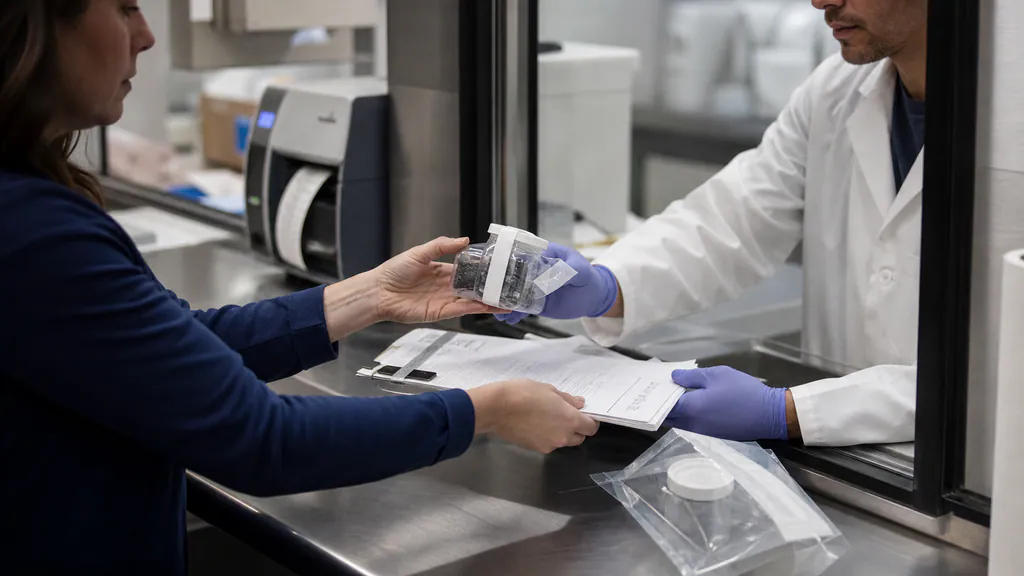
A “third-party tested” badge can be added to a website in five minutes. A real laboratory report takes a sample, a method, a result, and a batch you can match.
Third-party tested means an independent lab—not the seller—tested a specific batch and issued a report you can verify.
The badge is marketing. The report is evidence.
See Certiva’s published third-party reports →
Is the third-party testing claim real?
Look for four pieces of evidence before you trust the badge.
Batch
Does the report match the vial?
The sample or lot number should connect the tested material to the product being offered.
Lab + method
Who tested what, and how?
The issuing laboratory and analytical methods should be clearly named.
Actual result
Numbers beat “PASS”
Look for measured results, dates, specifications, and supporting data—not a blank promise.
What does third-party tested mean?
“Third party” means the laboratory performing the analysis is separate from the seller making the product claim.
That separation matters because the seller does not get to grade its own homework. An independent laboratory receives a sample, performs the requested tests, records the results, and issues a report.
For a peptide buyer, the useful chain looks like this:
Product vial → batch number → submitted sample → laboratory report → test method → result
If that chain stays connected, third-party testing adds real confidence. If the report has no matching batch, the test may be genuine but still fail to prove anything about the vial being sold today.
Why isn’t the badge enough?
The phrase “third-party tested” is not a protected magic phrase. A website can display it without showing:
- which laboratory performed the test;
- which batch was tested;
- when the test happened;
- which methods were used;
- what the specifications were; or
- what result the laboratory measured.
That is why smart buyers ask one more question:
Can I see the report for the batch I am ordering?
A supplier that answers with a batch-linked report turns a claim into something you can inspect. Certiva publishes selected reports openly and provides the applicable current-batch documentation with inquiries.
The four proof checks every buyer can do
You do not need to be a chemist. Start with these four boxes.
1. Match the product and batch
The report should name the sample and identify the batch, lot, internal reference, or another traceable sample code.
Then compare it with:
- the vial label;
- the supplier’s batch information;
- the packing list; and
- the product being quoted.
A report for Semaglutide does not prove Tirzepatide. A report for last year’s lot does not automatically prove today’s lot.
2. Identify the laboratory
A useful report names the laboratory and provides enough information to identify the issuer. Look for:
- laboratory name;
- contact details or website;
- report or task number;
- authorized sign-off; and
- a verification reference when available.
The goal is not to find the fanciest logo. It is to confirm that a real, independent testing organization stands behind the document.
3. Check the methods
The words “lab tested” are too broad. The report should say what analysis was performed.
For research peptides, the most common core methods are:
- HPLC for purity and related peaks; and
- mass spectrometry for molecular identity.
Other tests may be relevant depending on the product, formulation, and buyer’s requirements. The right test menu should match the question being asked.
4. Read the actual results
Strong reports show measured values. For example:
- an HPLC purity percentage;
- expected and observed mass information;
- content or quantity when tested;
- acceptance limits;
- analysis date; and
- a clear conclusion tied to the sample.
“PASS” is useful only when the report also tells you what was measured and what passing meant.
HPLC vs mass spectrometry: why both matter
HPLC and mass spectrometry are not competing badges. They answer different questions.
| Method | The simple question it answers |
|---|---|
| HPLC | How much of the detected material appears as the main component, and what related peaks are present? |
| Mass spectrometry | Does the measured molecular mass support the expected peptide identity? |
A 99% HPLC result is valuable purity evidence. It does not, by itself, provide the same identity information as a mass spectrum.
That is why Certiva’s quality process pairs HPLC purity testing with mass-spectrometry identity assessment. Read the complete plain-English HPLC vs mass spectrometry guide.
What does ISO/IEC 17025 add?
ISO/IEC 17025 is the international standard used to assess testing and calibration laboratory competence.
Accreditation can add confidence that a laboratory has been evaluated for:
- technical competence;
- impartiality;
- consistent operation;
- controlled methods and equipment; and
- reliable reporting systems.
The useful detail is the scope. A laboratory may be accredited for certain methods or fields, so buyers should confirm whether the relevant analysis falls within that scope.
Accreditation strengthens the laboratory story. The batch match and the actual report still matter.
Five warning signs of weak “third-party testing”
Pause before relying on a report when:
- No batch or sample ID appears.
- The supplier shows only a cropped purity number.
- The laboratory cannot be identified.
- No test method or analysis date is listed.
- The same report is reused for every product or strength.
Another warning sign is a report that looks impressive but does not connect to the current order. Good documentation should make traceability easier, not force the buyer to guess.
Our seven easy peptide-supplier checks show how testing fits with packaging, communication, manufacturing visibility, and shipping support.
What do Certiva’s published reports show?
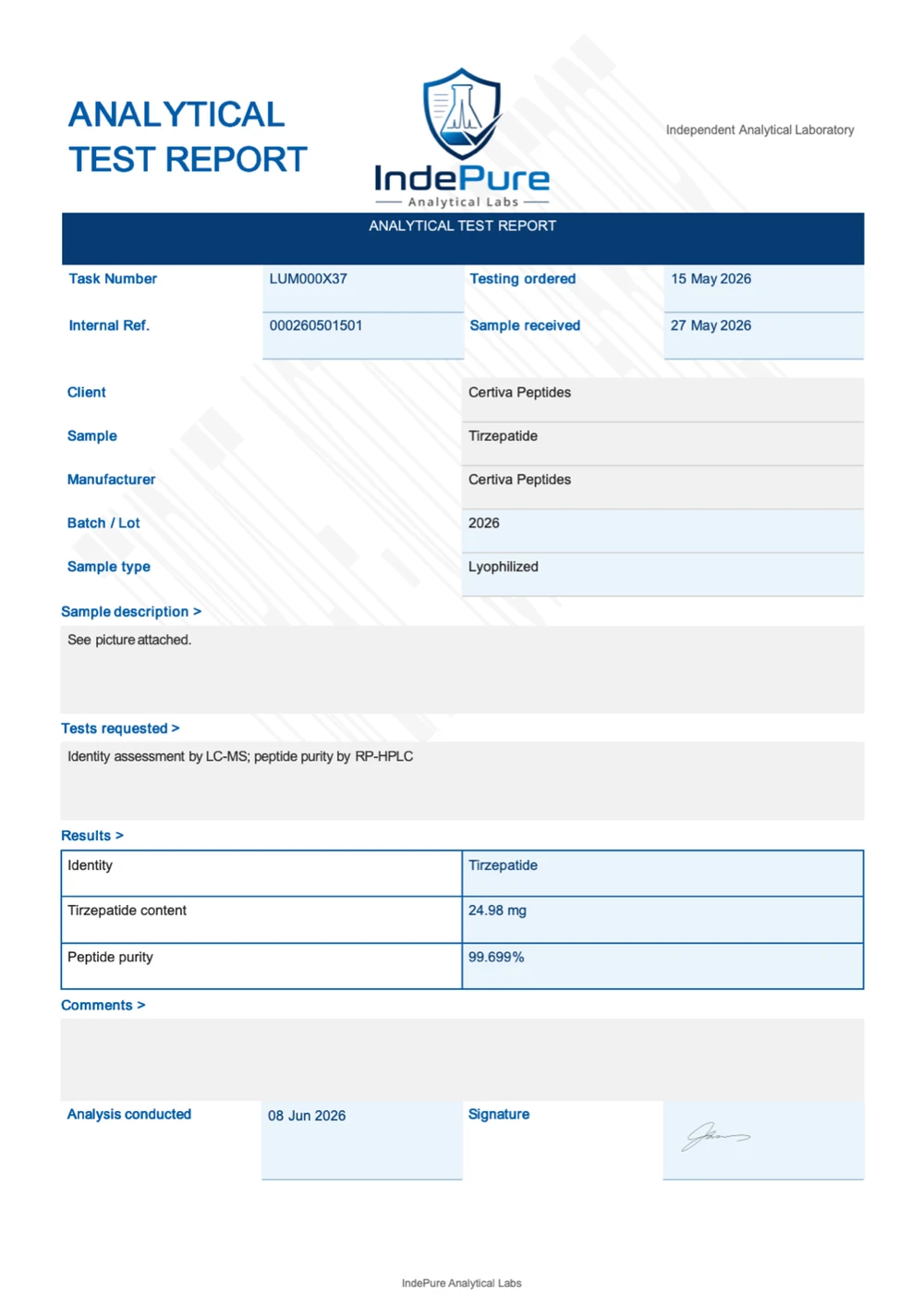
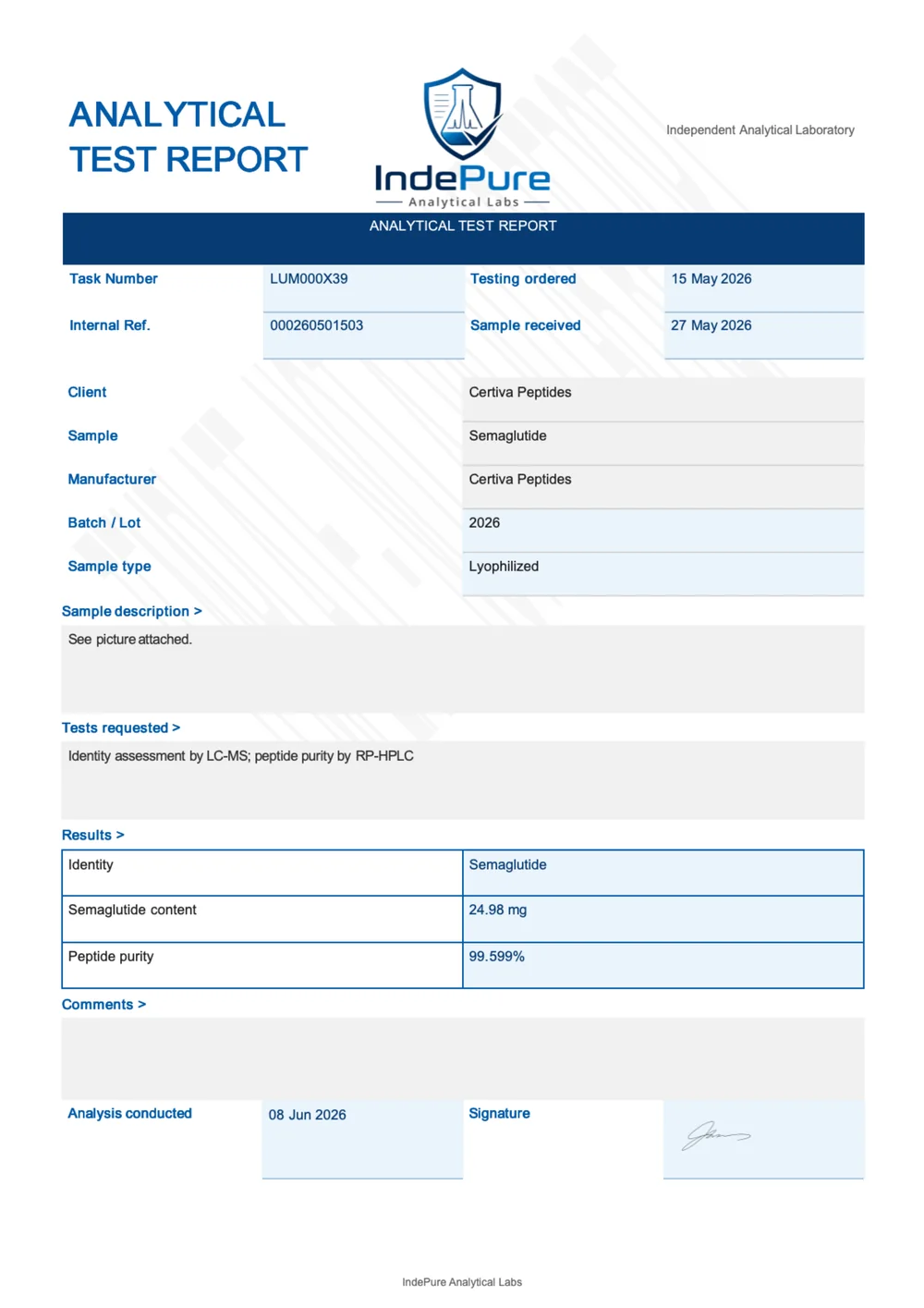
Certiva publishes selected 2026 third-party analytical reports so buyers can see the evidence before submitting an inquiry.
| Product | Published batch | HPLC purity result |
|---|---|---|
| Tirzepatide | 2026 | 99.699% |
| Retatrutide | 2026 | 99.699% |
| Semaglutide | 2026 | 99.599% |
The reports identify the sample, batch, client, testing request, dates, and measured result. Buyers can review:
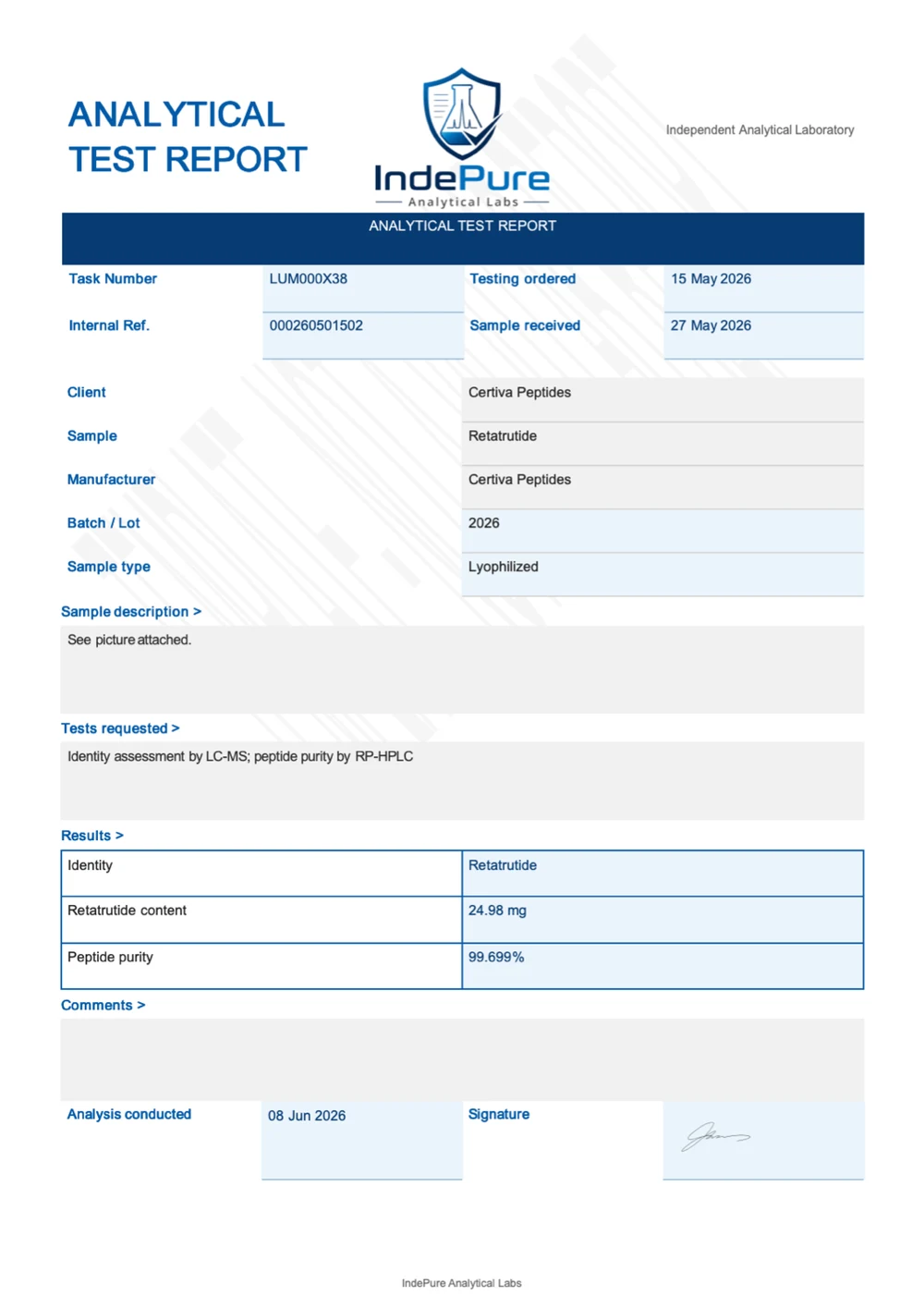
Published examples show how Certiva documents quality. For an order, request the applicable report for the current lot being offered.
Does third-party tested automatically mean safe?
Third-party testing proves only what the report actually tested.
An identity-and-purity report provides identity-and-purity evidence. It does not silently prove sterility, endotoxin, heavy metals, microbiological quality, or every other possible attribute unless those analyses are listed.
That does not weaken the report. It makes the evidence precise.
The best buying question is not “Was it tested?” It is:
Was this batch tested for the attributes my work requires?
Certiva research peptides are supplied as laboratory reference materials and are not for human consumption.
What should you request before ordering?
Send the supplier the product, vial specification, quantity, destination, and documentation requirements. Ask for:
- the current lot or batch;
- the applicable third-party COA;
- HPLC purity and identity information;
- available specifications and packaging;
- storage and shipping details;
- lead time; and
- bulk, wholesale, or custom options.
Certiva replies with current availability, applicable batch documentation, and a quote. No public price is used because product, quantity, destination, and documentation needs can change the order.
The report matters more than the badge
Third-party tested means an independent lab—not the seller—tested a specific batch and issued a report you can verify.
Do not stop at the badge. Check the batch, lab, method, and result.
Certiva makes that check easier by publishing selected reports and providing current-batch documentation with inquiries. The proof is not an adjective—it is a document tied to the material being offered.
Request the current COA and a quote
Tell Certiva the product, vial specification, quantity, destination country, and test documentation you need. We will reply with the applicable batch report, availability, lead time, bulk options, and a quote.
See all published reports · Learn how to read a peptide COA · Visit the Certiva facility page
Request the current third-party COA + a quote →
Sources and further reading
- ISO: ISO/IEC 17025 testing and calibration laboratory standard
- FDA Q7A: GMP guidance, batch testing, and Certificates of Analysis
- FDA: What a supplier COA should contain
Frequently asked questions
What does third-party tested mean?
Third-party tested means an independent lab—not the seller—tested a specific batch and issued a report you can verify.
Does third-party tested automatically mean high quality?
It is strong independent evidence when the report matches the product batch and shows the laboratory, methods, dates, specifications, and actual results. A badge without a report is only a claim.
How can I verify a third-party laboratory report?
Match the product and batch number, identify the laboratory, check the test and analysis dates, review the methods and numerical results, and use the laboratory's verification contact or report reference when available.
What should a peptide third-party test include?
For peptide identity and purity, useful evidence includes HPLC purity data, a chromatogram, mass-spectrometry identity information, the sample or batch identifier, analysis dates, and the issuing laboratory.
Is HPLC enough to prove peptide identity?
HPLC is useful for measuring purity and related peaks, but mass spectrometry provides stronger molecular-identity evidence. The two methods answer different questions and work best together.
Is an ISO 17025 laboratory better?
ISO/IEC 17025 accreditation adds confidence in a laboratory's competence, impartiality, and consistent operation when the relevant method is within its accredited scope. Buyers should still inspect the specific report and batch match.
Does Certiva publish third-party test reports?
Yes. Certiva publishes selected 2026 third-party reports for Tirzepatide, Retatrutide, and Semaglutide and provides the applicable current-batch COA with an inquiry.
For research use only. Not for human consumption. This article is educational and makes no medical, therapeutic, or dosing claims.
← More quality testing & COAs guides · Have a question? Start an inquiry →