


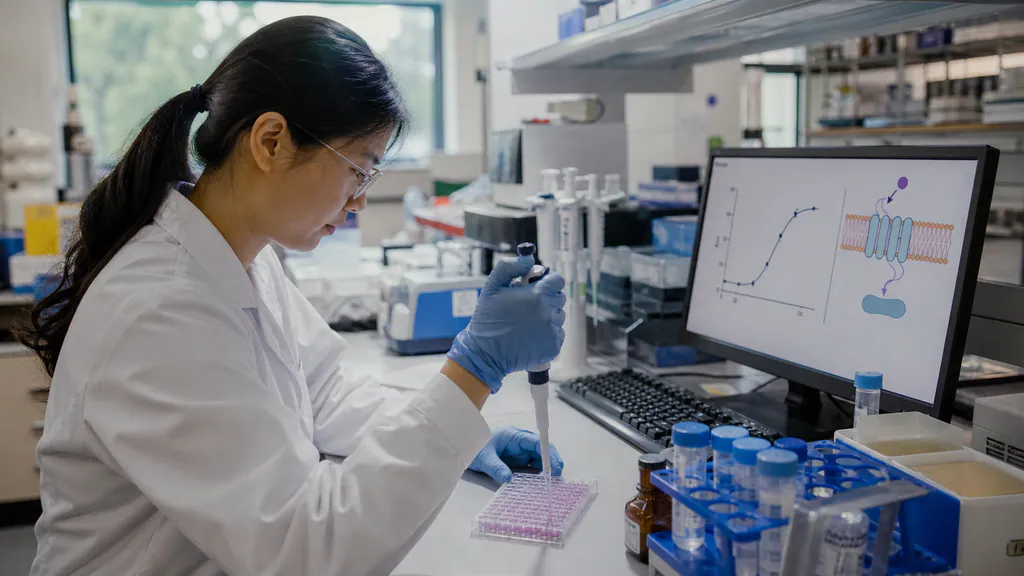
Ozempic made the headlines. Semaglutide is the molecule doing the work.
Semaglutide is a synthetic GLP-1 peptide used as the active ingredient in approved medicines for specific indications.
It works by making the body’s natural “I have eaten” signal last much longer. That single idea helped turn one peptide into the active ingredient behind some of the world’s best-known diabetes and weight-management medicines.
See Certiva Semaglutide specifications →
What does semaglutide actually do?
One GLP-1 signal helps with three things people care about most.
Blood sugar
Supports the after-meal response
GLP-1 helps the body release insulin when blood sugar is high.
Appetite
Turns down hunger signals
It works with parts of the brain involved in appetite.
Fullness
Helps fullness last longer
It slows how quickly food moves out of the stomach.
What is semaglutide?
Semaglutide is a GLP-1 receptor agonist. In normal English, that means it copies the action of a natural hormone called glucagon-like peptide-1, or GLP-1.
Your digestive system releases GLP-1 after you eat. It tells the body that food has arrived and helps manage insulin, appetite, and fullness.
Natural GLP-1 disappears in minutes. Semaglutide is engineered to resist being broken down and remain active for about a week. That is the design feature that makes once-weekly finished medicines possible.
Semaglutide is also a peptide—a chain of 31 amino acids. It is a small, carefully redesigned version of a signal the body already understands.
How does semaglutide work?
Semaglutide activates GLP-1 receptors in several parts of the body. The result is easier to understand as three connected effects.
1. It helps with the blood-sugar response
When blood sugar rises after a meal, GLP-1 signaling helps the pancreas release more insulin. It also reduces glucagon when appropriate. Together, those actions help the body manage blood sugar.
That blood-sugar effect is why semaglutide first became widely known through finished medicines for type 2 diabetes.
2. It reduces appetite
GLP-1 receptors are found in parts of the brain that help regulate hunger. Stronger GLP-1 signaling can reduce appetite and food intake.
The result is simple: hunger can feel quieter, portions can feel more satisfying, and eating less can become easier.
3. It helps people feel full longer
Semaglutide slows gastric emptying—the movement of food from the stomach into the small intestine. In simple terms, food leaves the stomach more slowly, so the feeling of fullness can last longer.
These actions reinforce one another. People can feel full sooner, stay full longer, and consume less food while the same GLP-1 signal supports the after-meal blood-sugar response.
Is semaglutide the same as Ozempic or Wegovy?
Semaglutide is the active ingredient. Ozempic, Wegovy, and Rybelsus are finished FDA-approved prescription medicines that contain it.
If someone says “Ozempic” when discussing weight loss, semaglutide is usually the molecule they are actually thinking about. But the names are not interchangeable:
| Name | What it describes |
|---|---|
| Semaglutide | The active GLP-1 peptide molecule |
| Ozempic | A finished injectable semaglutide medicine centered on type 2 diabetes |
| Wegovy | A finished injectable semaglutide medicine centered on chronic weight management |
| Rybelsus | A finished oral semaglutide medicine centered on type 2 diabetes |
The word “oral” describes delivery, not chemistry. Our 2026 oral GLP-1 peptide guide explains why oral semaglutide remains a peptide while several newer oral GLP-1 candidates are non-peptide small molecules.
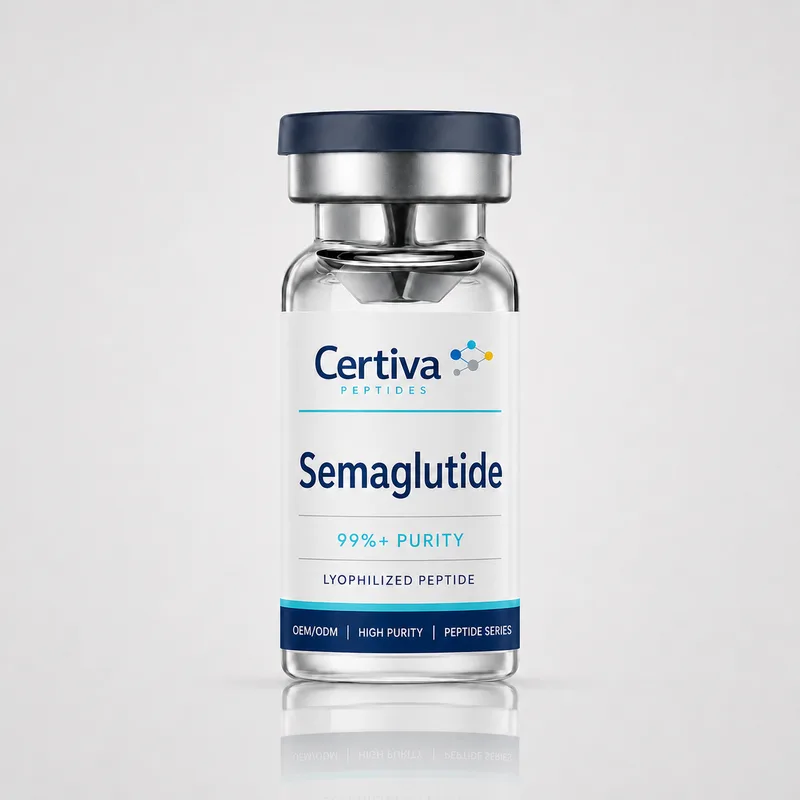
Certiva Semaglutide is a lyophilized research reference material. It is not Ozempic, Wegovy, Rybelsus, or another finished prescription product, and it is not for human consumption.
How much weight loss did semaglutide produce in studies?
The best-known number comes from the large, peer-reviewed STEP 1 trial.
At 68 weeks:
- the semaglutide group lost an average of 14.9% of starting body weight;
- the placebo group lost an average of 2.4%; and
- 86.4% of participants in the semaglutide group lost at least 5%.
Both groups also received lifestyle support. The study included 1,961 adults with obesity or overweight and at least one related health condition, without diabetes.
The takeaway is direct: semaglutide delivered 14.9% average weight loss in a large randomized trial. It did not simply create a small change on the scale; half of the semaglutide group lost at least 15% of their starting weight.
The evidence later went beyond weight. The FDA approved Wegovy to reduce cardiovascular death, heart attack, and stroke in certain adults with cardiovascular disease and obesity or overweight. In the supporting trial, major events occurred in 6.5% of participants receiving Wegovy and 8% receiving placebo.
Semaglutide vs tirzepatide: what is the difference?
Semaglutide activates one receptor system: GLP-1. Tirzepatide activates two: GIP and GLP-1.
In the completed 72-week SURMOUNT-5 head-to-head trial, tirzepatide produced the larger average weight reduction. Semaglutide’s advantage is different: it has the longer clinical history, broader name recognition, and a well-established single-GLP-1 story.
The easy receptor shortcut is:
- Semaglutide: GLP-1
- Tirzepatide: GIP + GLP-1
- Retatrutide: GIP + GLP-1 + glucagon
See the full numbers in our semaglutide vs tirzepatide comparison or compare semaglutide directly with the newer triple agonist in retatrutide vs semaglutide. You can also see how a different fullness pathway changes the story in cagrilintide vs semaglutide.
For a closer look at what reduced hunger and cravings actually feel like, read how GLP-1 reduces appetite and quiets food noise. New 2026 human evidence also asks whether the same reward pathways reach beyond food; see semaglutide and alcohol cravings.
What side effects are commonly reported?
The most common side effects with finished semaglutide medicines are digestive. They include:
- nausea;
- vomiting;
- diarrhea;
- abdominal pain; and
- constipation.
In STEP 1, the most common side effects were mainly mild to moderate and digestive. Finished prescription products also carry important warnings, so medical decisions belong with a licensed healthcare professional using the current FDA label.
See the current label percentages and warning signs in our plain-English Semaglutide side-effects guide.
For research buyers, the practical question is different: does the material match its stated identity, purity, lot, and documentation?
Why does semaglutide still stand out?
Newer dual- and triple-receptor molecules now produce bigger headlines. Semaglutide still offers something valuable: a longer clinical record, major consumer recognition, multiple finished-product formats, and one of the clearest GLP-1 research stories in the category.
For research buyers, distributors, and product-development teams, that familiarity makes Semaglutide a useful reference for:
- single GLP-1 receptor research;
- comparisons with dual and triple agonists;
- metabolic and appetite-signaling models; and
- established-versus-next-generation peptide studies.
What should a semaglutide supplier provide?
Strong demand does not make every Semaglutide source equal. Before placing a research order, check:
- the exact molecule and vial specification;
- whether the vial lot matches the Certificate of Analysis;
- HPLC purity and identity information;
- packaging, storage, availability, and lead time;
- stocked, bulk, and custom-quantity options; and
- whether the supplier can provide current batch documents before payment.
Certiva offers Semaglutide in 5, 10, 15, 20, 30, and 50 mg vial specifications, with 10 vials per standard box. Bulk and custom quantities are available by inquiry.
Our published 2026 Semaglutide report lists 99.599% HPLC purity for that specific batch. Buyers can see the result before inquiring, then request the current applicable COA and lot information before ordering.
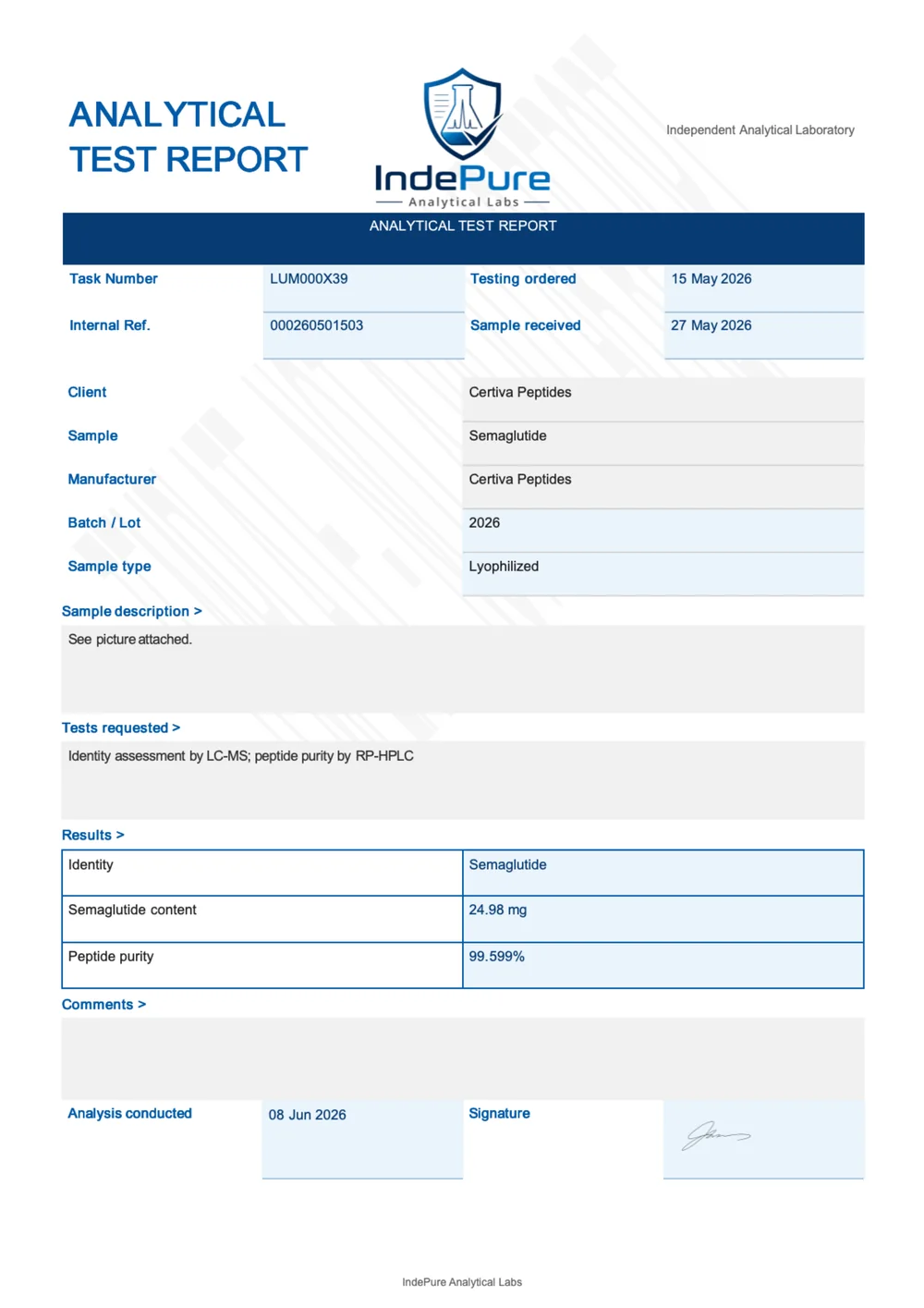
View the published Semaglutide COA · Learn how to read a peptide COA · See seven easy supplier checks
Why Semaglutide became the GLP-1 reference
Semaglutide is a GLP-1 peptide that helps control blood sugar, reduces appetite, and helps people lose weight.
Its value comes from one simple design: it makes the natural GLP-1 signal last much longer. That one signal connects blood-sugar control, reduced appetite, and longer-lasting fullness.
Semaglutide also combines a long clinical track record, 14.9% average weight loss in STEP 1, multiple FDA-approved finished medicines, and unmatched name recognition. Newer molecules may add more receptor signals, but Semaglutide is the molecule that made GLP-1 impossible to ignore.
Request Semaglutide specifications, the current COA, and a quote
Tell Certiva the vial specification, quantity, destination country, and documentation requirements. We will reply with current availability, applicable batch information, lead time, bulk options, and a quote.
View Semaglutide specifications · See published COAs · Visit the Certiva facility page
Compare Semaglutide specifications + request the current COA →
Sources and further reading
- FDA: What is semaglutide and which products contain it?
- New England Journal of Medicine: Once-Weekly Semaglutide in Adults with Overweight or Obesity
- FDA: Wegovy cardiovascular-risk indication
- New England Journal of Medicine: Tirzepatide as Compared with Semaglutide for the Treatment of Obesity
Frequently asked questions
What is semaglutide?
Semaglutide is a synthetic GLP-1 peptide used as the active ingredient in approved medicines for specific indications. It affects blood-sugar regulation, appetite, and fullness signals.
Is semaglutide the same as Ozempic or Wegovy?
Semaglutide is the active ingredient. Ozempic and Wegovy are FDA-approved finished prescription medicines that contain semaglutide but have different approved uses.
How does semaglutide work?
Semaglutide copies the action of the natural GLP-1 signal. It helps the body respond to blood sugar, sends stronger fullness signals to the brain, and slows how quickly food leaves the stomach.
Is semaglutide a peptide?
Yes. Semaglutide is a synthetic peptide based on the natural GLP-1 hormone. It is engineered to remain active much longer than natural GLP-1.
How much weight loss was reported with semaglutide?
In the 68-week STEP 1 trial, adults taking 2.4 mg semaglutide with lifestyle support lost an average of 14.9% of their starting body weight, compared with 2.4% for placebo.
What is the difference between semaglutide and tirzepatide?
Semaglutide activates one receptor system, GLP-1. Tirzepatide activates two, GIP and GLP-1. Both have FDA-approved finished medicines, while tirzepatide produced the larger average weight reduction in their completed head-to-head trial.
Can buyers request a Certiva semaglutide COA before ordering?
Yes. Buyers can review Certiva's published batch COA and request the current applicable report, vial specifications, availability, bulk options, and a destination-based quote before ordering.
For research use only. Not for human consumption. This article is educational and makes no medical, therapeutic, or dosing claims.
← More gLP-1 & weight management guides · Have a question? Start an inquiry →