


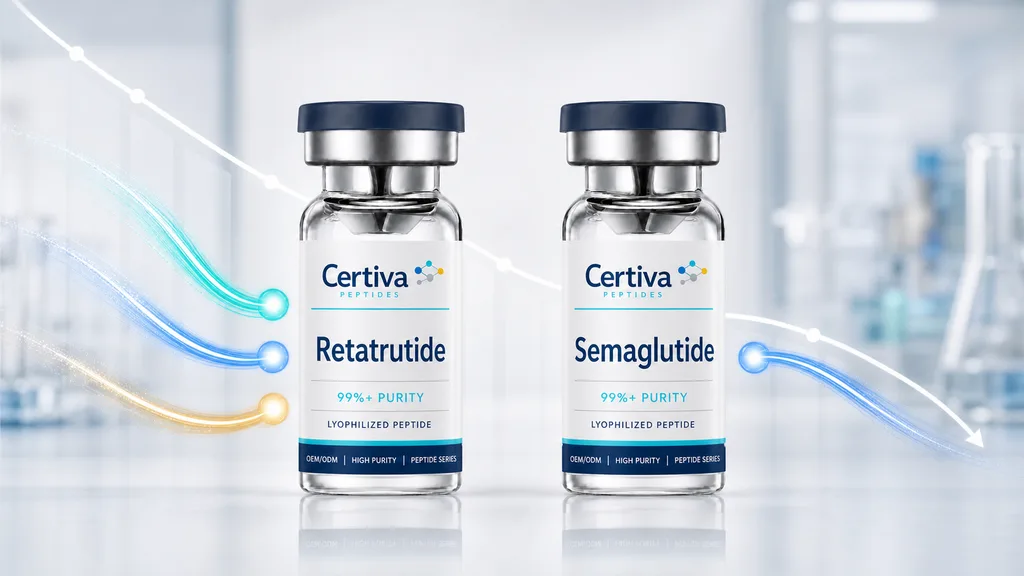
Semaglutide opened the GLP-1 door. Retatrutide walked through with three signals and a much bigger headline number.
Retatrutide has reported the larger topline average weight-loss result; semaglutide has the longer approved track record.
That is the useful answer in July 2026. Retatrutide is the more powerful next-generation research story. Semaglutide is the established GLP-1 story with years of clinical use and FDA-approved finished medicines.
Compare Retatrutide and Semaglutide specifications →
Breakthrough history or the bigger new result?
Semaglutide established the category. Retatrutide is pushing the weight-loss number higher.
Semaglutide
The established GLP-1
One receptor signal, a longer record, and approved finished medicines.
Retatrutide
The triple-signal challenger
Three receptor signals and the larger Phase 3 topline average.
Watch next
The direct comparison
A Phase 3 head-to-head study is nearing its first major result.
Retatrutide vs semaglutide at a glance
| Comparison | Semaglutide | Retatrutide |
|---|---|---|
| Receptor signals | 1: GLP-1 | 3: GIP + GLP-1 + glucagon |
| Highest major obesity-trial average | 14.9% at 68 weeks in STEP 1 | 28.3% at 80 weeks in TRIUMPH-1 |
| U.S. status in July 2026 | Active ingredient in approved finished medicines | Investigational; submission planned for Q1 2027 |
| Clinical history | Longer | Newer |
| Certiva vial specifications | 5 mg to 50 mg | 5 mg to 60 mg |
| Published Certiva 2026 COA | 99.599% HPLC purity | 99.699% HPLC purity |
The headline comparison is strong. Retatrutide reported nearly twice the average percentage in its biggest obesity trial.
The figures come from separate trials with different timelines and participants. A direct Phase 3 comparison is already underway, giving this page a clear result to update next.
What is the biggest difference?
Semaglutide activates one receptor system: GLP-1.
Retatrutide activates three receptor systems:
- GIP;
- GLP-1; and
- glucagon.
The easy shortcut is one signal versus three signals.
Semaglutide strengthens a natural after-meal GLP-1 message. That helps with blood sugar, appetite, and fullness.
Retatrutide keeps the GLP-1 signal, adds GIP, and adds glucagon. The goal is a broader metabolic effect from one peptide molecule.
Three signals give retatrutide a broader design. That triple-receptor approach has now been followed by a very large Phase 3 weight-loss result.
Which reported more weight loss?
Retatrutide reported the larger average.
Retatrutide: 28.3% in TRIUMPH-1
In the Phase 3 TRIUMPH-1 trial, participants receiving the highest studied retatrutide dose lost an average of:
- 28.3% of starting body weight;
- 70.3 pounds; and
- that result was measured at 80 weeks.
Among participants who started with a BMI of at least 35 and continued into the 104-week extension, average weight loss reached 30.3%.
Lilly reported the full topline result in its May 2026 TRIUMPH-1 announcement.
Semaglutide: 14.9% in STEP 1
In the landmark Phase 3 STEP 1 trial, participants receiving semaglutide lost an average of:
- 14.9% of starting body weight;
- compared with 2.4% for placebo; and
- that result was measured at 68 weeks.
The trial included 1,961 adults and helped establish semaglutide as a major weight-management molecule.
Read the peer-reviewed STEP 1 results in The New England Journal of Medicine.
| Major trial | Peptide | Average weight change | Time |
|---|---|---|---|
| TRIUMPH-1 | Retatrutide | −28.3% | 80 weeks |
| STEP 1 | Semaglutide | −14.9% | 68 weeks |
Retatrutide owns the larger reported topline number. Semaglutide owns the longer clinical record.
Why might retatrutide produce a larger result?
The most obvious difference is the third glucagon signal.
GLP-1 and GIP are connected with appetite, fullness, and the body’s response to food. Glucagon adds another pathway connected with energy use.
That creates a simple three-part idea:
- GLP-1 helps turn down appetite;
- GIP adds a second meal-related signal; and
- glucagon may add more energy-use activity.
Researchers are studying how those signals work together. The TRIUMPH-1 result shows why the triple-agonist idea attracts so much attention.
Retatrutide is sometimes called “GLP-3” online. That nickname is catchy but not scientifically correct. Retatrutide is one peptide that activates three different receptor systems.
For the newest results in people with type 2 diabetes, severe obesity, and heart disease, read our July 2026 Retatrutide Phase 3 guide.
Why does semaglutide still matter?
Semaglutide changed the category before retatrutide reached Phase 3.
Its advantages include:
- a longer clinical history;
- FDA-approved finished prescription medicines;
- major consumer recognition;
- a large body of published research; and
- a clear role as the standard single-GLP-1 reference.
That makes semaglutide more than the “older option.” It is the benchmark newer dual- and triple-receptor peptides are compared against.
Read our plain-English introduction to what semaglutide is and how GLP-1 works.
Has retatrutide been tested directly against semaglutide?
Yes. TRANSCEND-T2D-2 is the direct Phase 3 comparison.
The study includes about 1,250 adults with type 2 diabetes. It compares weekly retatrutide with weekly semaglutide and measures:
- A1C;
- body-weight change;
- waist and blood-fat measures; and
- safety and side effects.
The estimated primary completion is August 2026. No final results were posted when this article was published.
That gives the comparison a clear next chapter. Today, retatrutide has the larger result across separate obesity trials. The direct study can show how the two perform under the same protocol in adults with type 2 diabetes.
See the current TRANSCEND-T2D-2 study record on ClinicalTrials.gov.
Which one has the better side-effect story?
The most common side effects reported for both peptides were digestive.
They included:
- nausea;
- diarrhea;
- vomiting; and
- constipation.
In both major trial programs, these effects were usually mild to moderate and were most common while doses were being increased.
Semaglutide has the advantage of more years of follow-up and real-world use. Retatrutide’s completed Phase 3 trials provide a growing safety record, and the direct comparison will make the difference easier to measure.
The simple current conclusion is: both have a mainly digestive side-effect pattern, while semaglutide has the longer record.
Medical decisions about finished medicines belong with a licensed healthcare professional. Certiva supplies laboratory research references, not finished prescription medicines.
Which one is better for research buyers?
Choose Semaglutide when the project needs:
- an established single-GLP-1 reference;
- a longer clinical and publication history;
- comparison with dual and triple agonists; or
- broad consumer and market recognition.
Choose Retatrutide when the project needs:
- a triple GIP, GLP-1, and glucagon reference;
- next-generation metabolic-pathway research;
- comparison with single- or dual-receptor peptides; or
- the molecule behind the largest current Phase 3 topline average.
Choose both when the project is designed to compare an established GLP-1 reference with a newer triple agonist.
How do Certiva specifications compare?
| Certiva research material | Available vial specifications | Standard box |
|---|---|---|
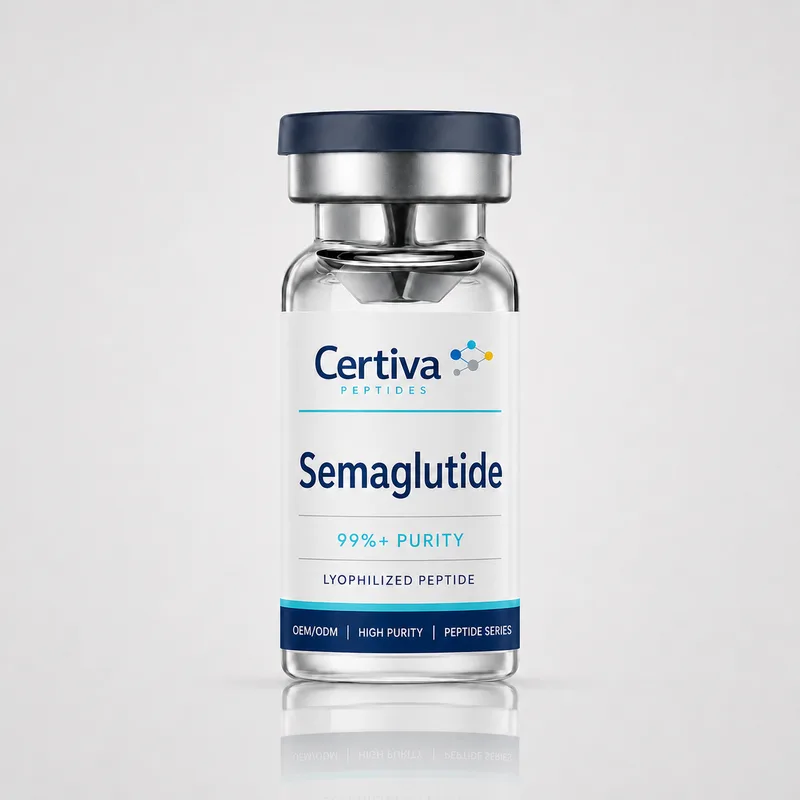
| Semaglutide | 5, 10, 15, 20, 30 and 50 mg | 10 vials |
| Retatrutide | 5, 10, 15, 20, 30, 40, 50 and 60 mg | 10 vials |
Bulk and custom quantities are available by inquiry.
Certiva also publishes 2026 batch reports for both research references:
- Semaglutide: 99.599% HPLC purity
- Retatrutide: 99.699% HPLC purity
These percentages belong to the published lots, not every future batch. Buyers should match the current report to the lot being offered.
View the published Semaglutide COA · View the published Retatrutide COA
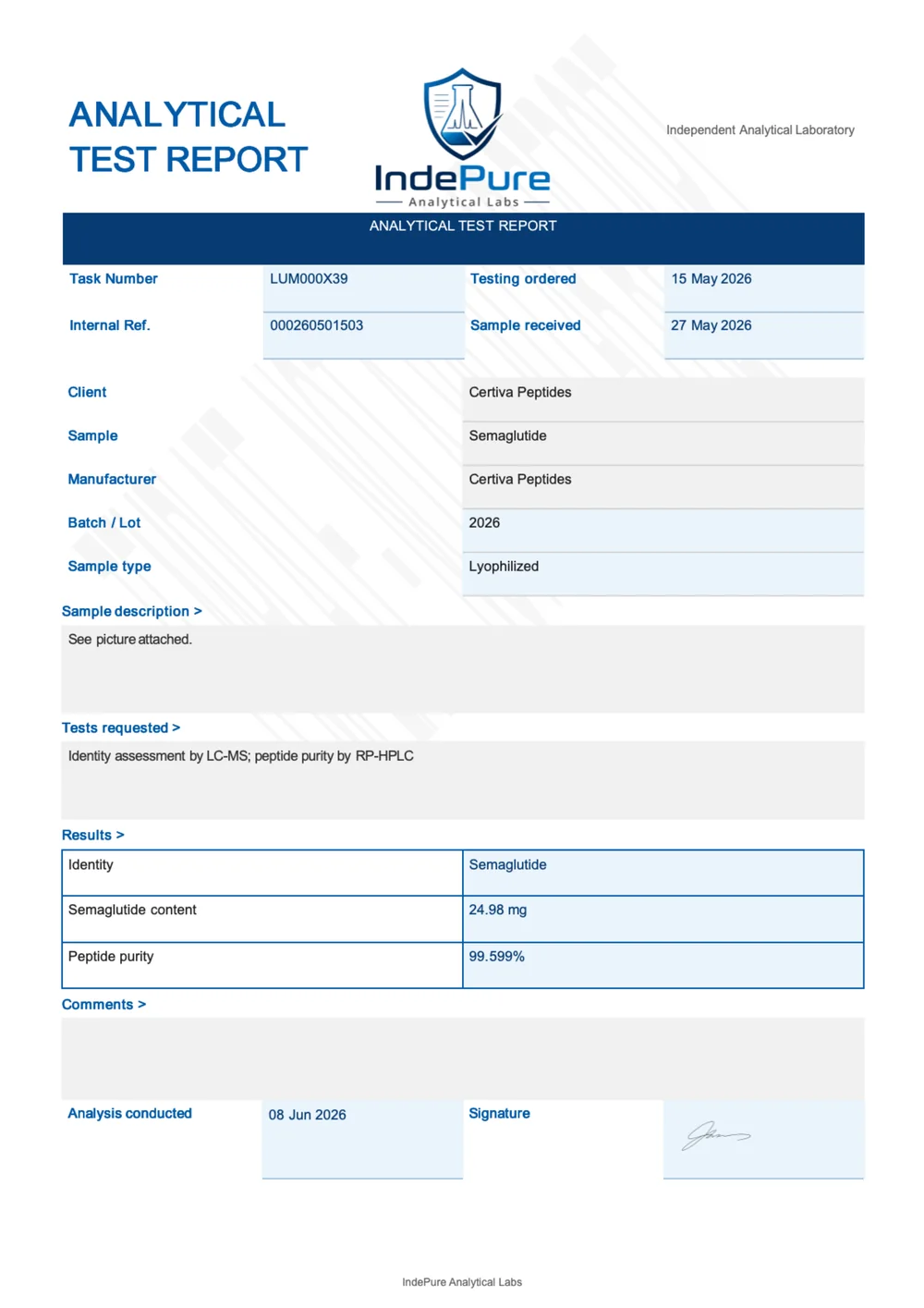
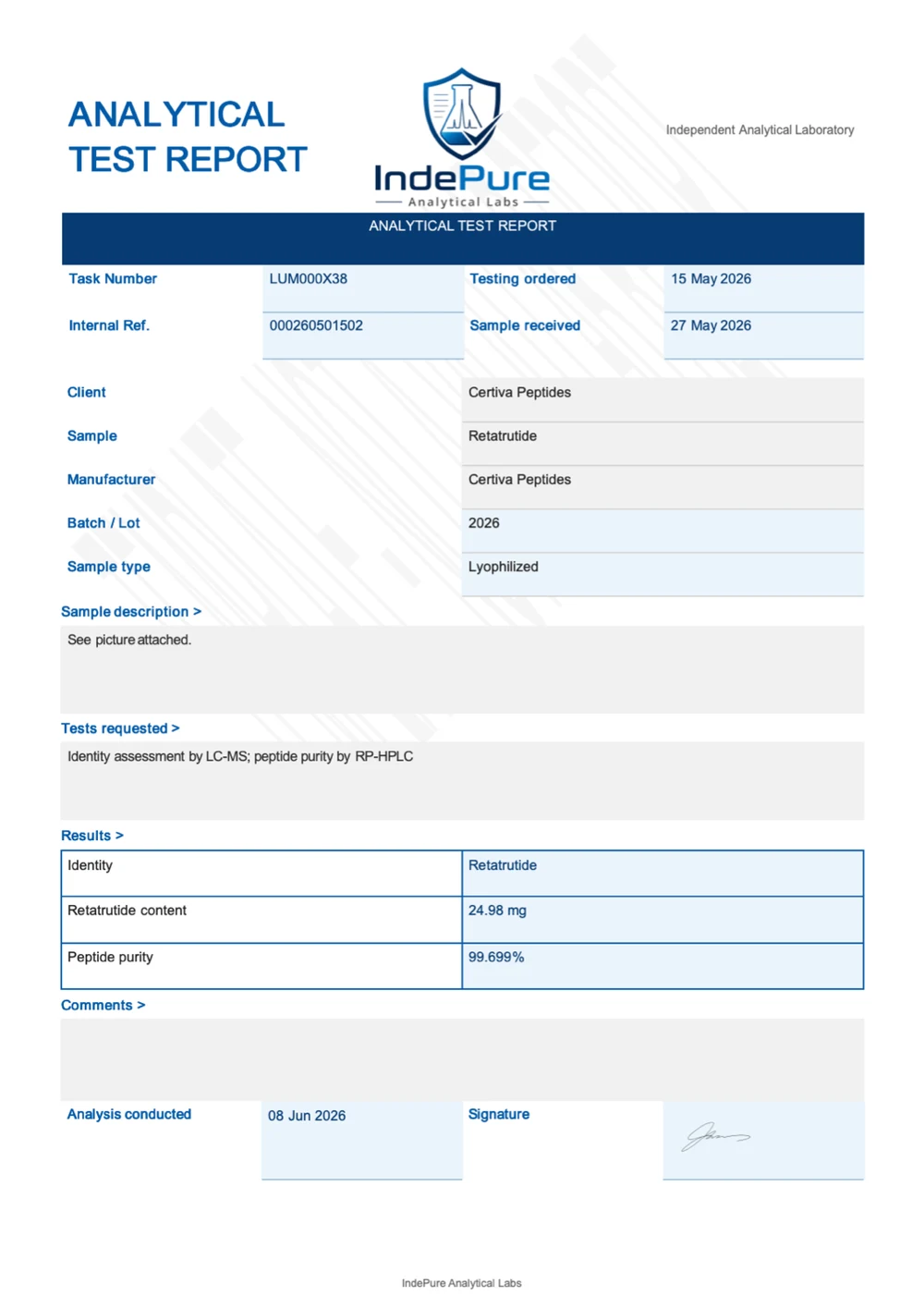
Need help checking the batch reports? Use our five-minute peptide COA guide or compare HPLC and mass spectrometry testing.
How to read the efficacy comparison responsibly
Retatrutide has reported the larger topline average weight-loss result; semaglutide has the longer approved track record.
Retatrutide is the bolder next-generation story: three receptor signals and 28.3% average weight loss at 80 weeks in TRIUMPH-1.
Semaglutide is the established benchmark: one GLP-1 signal, years of clinical history, approved finished medicines, and one of the best-known names in weight-management research.
For researchers and buyers, the strongest comparison is not old versus new. It is the established GLP-1 reference versus the triple-agonist challenger.
Compare current Retatrutide and Semaglutide lots
To compare Retatrutide and Semaglutide as research materials, send the intended format, quantities, destination, and document checklist for each. Certiva can then provide current-batch evidence and commercial terms without treating the two materials as interchangeable.
View Retatrutide specifications · View Semaglutide specifications · See all published Certiva COAs
Request both current COAs + a comparison quote →
Sources and further reading
- Lilly: TRIUMPH-1 Phase 3 results
- Lilly: TRIUMPH-2 and TRIUMPH-3 results and planned Q1 2027 U.S. submission
- New England Journal of Medicine: STEP 1 Semaglutide trial
- ClinicalTrials.gov: Retatrutide versus Semaglutide, TRANSCEND-T2D-2
Frequently asked questions
Which is better, retatrutide or semaglutide?
Retatrutide has reported the larger topline average weight-loss result; semaglutide has the longer approved track record.
What is the main difference between retatrutide and semaglutide?
Semaglutide activates the GLP-1 receptor. Retatrutide activates three receptor systems, GIP, GLP-1, and glucagon.
Which reported more weight loss, retatrutide or semaglutide?
In separate major trials, the highest-dose retatrutide group averaged 28.3% weight loss at 80 weeks in TRIUMPH-1, while semaglutide averaged 14.9% at 68 weeks in STEP 1.
Has retatrutide been tested directly against semaglutide?
Yes. TRANSCEND-T2D-2 is a Phase 3 head-to-head study in adults with type 2 diabetes. Its estimated primary completion is August 2026, and no final result was posted when this article was published.
Is retatrutide or semaglutide FDA approved?
Semaglutide is the active ingredient in FDA-approved finished prescription medicines. Retatrutide remains investigational, with a U.S. submission planned for the first quarter of 2027.
Can buyers compare Certiva retatrutide and semaglutide COAs before ordering?
Yes. Certiva publishes batch COAs for both research references and accepts requests for the current applicable reports, vial specifications, availability, bulk options, and a destination-based quote.
For research use only. Not for human consumption. This article is educational and makes no medical, therapeutic, or dosing claims.
← More gLP-1 & weight management guides · Have a question? Start an inquiry →