


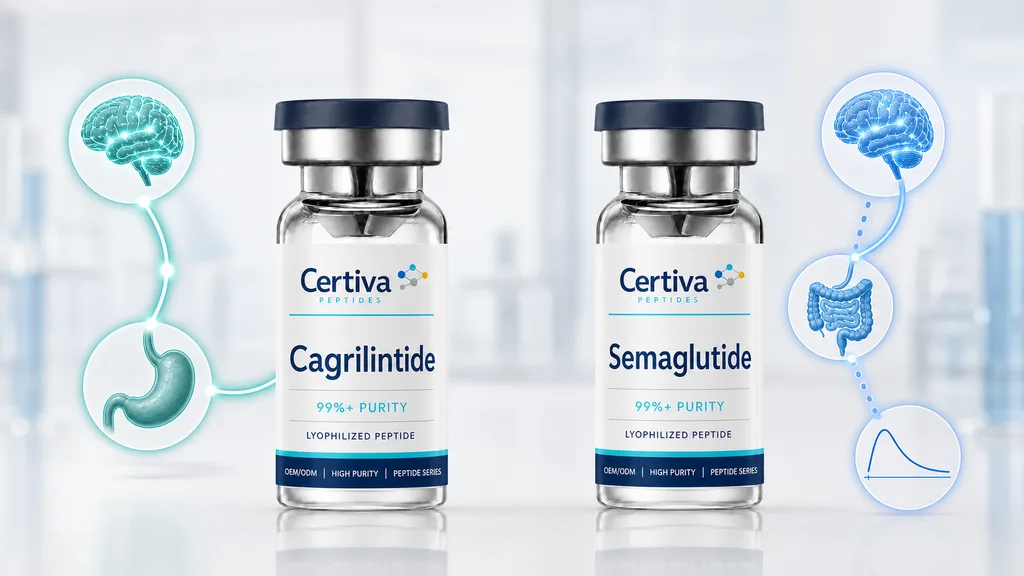
One is the GLP-1 name almost everyone knows. The other is the amylin challenger that makes a two-pathway combination possible.
Semaglutide won the stand-alone weight-loss number; cagrilintide brought the amylin pathway that made the combination stand out.
In the same 68-week REDEFINE 1 trial, semaglutide produced more average weight loss than cagrilintide alone. But the biggest result came when researchers used both pathways together.
That is the real cagrilintide vs semaglutide story: one strong GLP-1 signal, one different amylin signal, and a combination that outperformed either one alone.
Compare Cagrilintide and Semaglutide specifications →
Which one stands out?
It depends on whether you want the stronger stand-alone number or the pathway that adds something new.
Semaglutide
Stronger stand-alone result
The GLP-1 group averaged more weight loss in REDEFINE 1.
Cagrilintide
A different fullness pathway
Amylin gives researchers something GLP-1 alone does not provide.
CagriSema
The biggest result
The amylin and GLP-1 combination led the same trial.
Cagrilintide vs semaglutide at a glance
| Comparison | Cagrilintide | Semaglutide |
|---|---|---|
| Main pathway | Amylin | GLP-1 |
| Simple role | Strengthens a meal-finished signal | Strengthens a gut-to-brain fullness signal |
| REDEFINE 1 average at 68 weeks | −11.8% | −16.1% |
| Combination role | Adds the amylin side of CagriSema | Adds the GLP-1 side of CagriSema |
| Certiva vial specifications | 5 mg and 10 mg | 5 mg to 50 mg |
The table gives the short answer. The details explain why both peptides matter.
What is the main difference?
Cagrilintide is a long-acting amylin analog. Semaglutide is a GLP-1 receptor agonist.
Both can affect appetite, fullness, and food intake. They reach those outcomes through different receptor systems.
Think of a house with two doorbells:
- cagrilintide presses the amylin doorbell;
- semaglutide presses the GLP-1 doorbell; and
- CagriSema presses both.
The body receives a different message from each pathway. That is why cagrilintide is valuable even when semaglutide produces the larger stand-alone number.
Need the basic introduction first? Read what cagrilintide is and how amylin works.
Which produced more weight loss?
REDEFINE 1 gives us a clean answer because it tested both peptides in the same large Phase 3 trial.
When researchers estimated what would happen if everyone stayed on treatment for 68 weeks:
| REDEFINE 1 group | Average body-weight change |
|---|---|
| CagriSema | −22.7% |
| Semaglutide | −16.1% |
| Cagrilintide | −11.8% |
| Placebo | −2.3% |
Semaglutide produced the larger stand-alone result. Cagrilintide still produced meaningful average weight loss through a different pathway.
Then the combination changed the picture. CagriSema produced the largest result of the four groups.
That makes cagrilintide commercially interesting for two reasons:
- it has its own amylin-based research story; and
- it adds a complementary pathway to GLP-1 combination research.
Novo Nordisk published the full comparison in its REDEFINE 1 announcement.
Why did the combination do better?
CagriSema combines:
- cagrilintide for amylin signaling; and
- semaglutide for GLP-1 signaling.
The pathways overlap in appetite and fullness, but they are not copies of one another.
Semaglutide works through GLP-1 receptors in the brain, gut, and pancreas. Cagrilintide acts through amylin receptors, including receptors involved in meal-ending signals.
Using both gave researchers a broader two-pathway approach. The result was greater average weight loss than either component produced alone in REDEFINE 1.
The peer-reviewed New England Journal of Medicine report included 3,417 participants. It found that the combination produced a significant and meaningful reduction in body weight compared with placebo.
Which is better for appetite and fullness?
Both are relevant, but they tell the body about food in different ways.
Semaglutide: the GLP-1 route
GLP-1 is released after eating. Semaglutide copies that signal for much longer. It can:
- reduce appetite;
- help fullness last longer;
- slow the movement of food from the stomach; and
- support the after-meal blood-sugar response.
Cagrilintide: the amylin route
Amylin is also released after eating. Cagrilintide is a longer-lasting version of that signal. It can:
- strengthen the brain’s meal-finished message;
- support satiety;
- reduce food intake; and
- slow how quickly food leaves the stomach.
The easy answer is not that one pathway “does appetite” and the other does not. Both matter. They simply reach the appetite system through different doors.
What is CagriSema?
CagriSema is the name used for cagrilintide plus semaglutide.
It is easy to remember:
- Cagri = cagrilintide
- Sema = semaglutide
The combination is important because it proves the two peptides are not an either-or story. They can also be a both-and story.
A 2026 Phase 3 trial in Japan and Taiwan made the comparison even clearer. CagriSema averaged 18.4% weight loss at 68 weeks, compared with 11.9% for semaglutide. That was another direct test of the two-pathway combination against GLP-1 alone.
The results are available in the 2026 REDEFINE 5 publication.
Is CagriSema the same as Retatrutide plus Cagrilintide?
No. This naming check is important for consumers and buyers.
| Name | Components |
|---|---|
| CagriSema | Cagrilintide + Semaglutide |
| Retatrutide + Cagrilintide | Retatrutide + Cagrilintide |
Retatrutide already activates three receptor systems: GIP, GLP-1, and glucagon. Semaglutide activates GLP-1 alone.
Replacing semaglutide with retatrutide creates a different research blend. The two names should never be used as if they mean the same thing.
Certiva discloses the two components in its Retatrutide + Cagrilintide research blend.
How do the side effects compare?
The most common reported side effects for both peptides were digestive.
They included:
- nausea;
- diarrhea;
- vomiting; and
- constipation.
In REDEFINE 1, most digestive events were mild to moderate. In the cagrilintide group, 1.3% stopped because of digestive side effects.
The practical takeaway is positive and simple: both pathways produced meaningful trial results, and most participants stayed in the study.
Medical decisions about finished medicines belong with a licensed healthcare professional. Certiva products are laboratory research references and are not finished prescription medicines.
Which one is better for research buyers?
The better research reference depends on the question being asked.
Choose Semaglutide when the project needs:
- an established GLP-1 reference;
- a well-known single-receptor comparison;
- a peptide with a longer clinical history; or
- a baseline for comparing dual and triple agonists.
Choose Cagrilintide when the project needs:
- an amylin-pathway reference;
- a different appetite and satiety signal;
- single-versus-combination research; or
- comparison with GLP-1 and multi-receptor peptides.
Choose both when the project is designed to compare complementary amylin and GLP-1 pathways.
What should buyers compare before ordering?
Do not stop at the molecule name. Compare the actual research materials.
| Certiva research material | Vial specifications | Standard box |
|---|---|---|
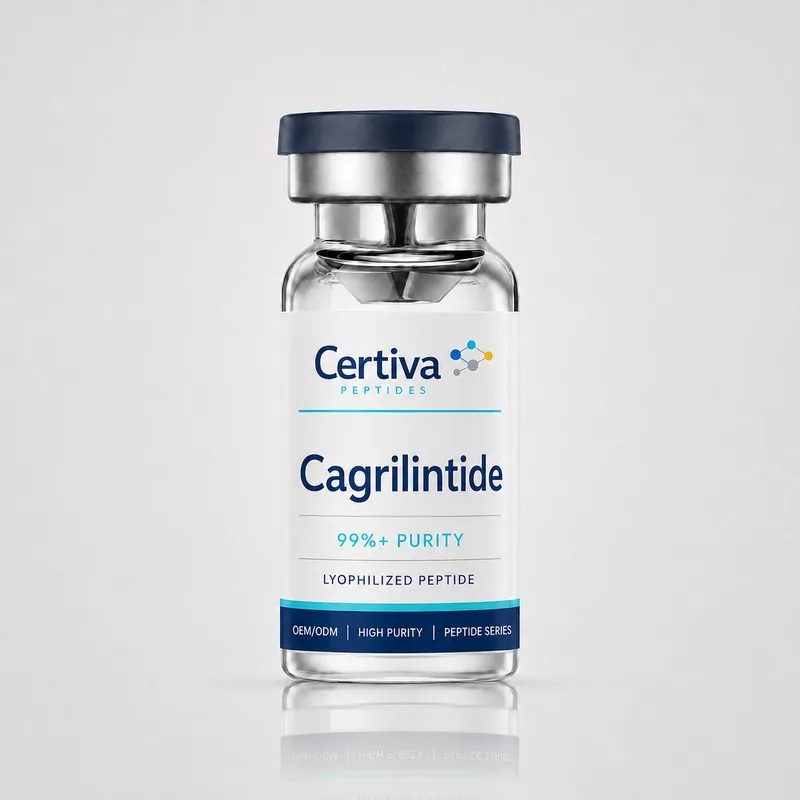
| Cagrilintide | 5 mg and 10 mg | 10 vials |
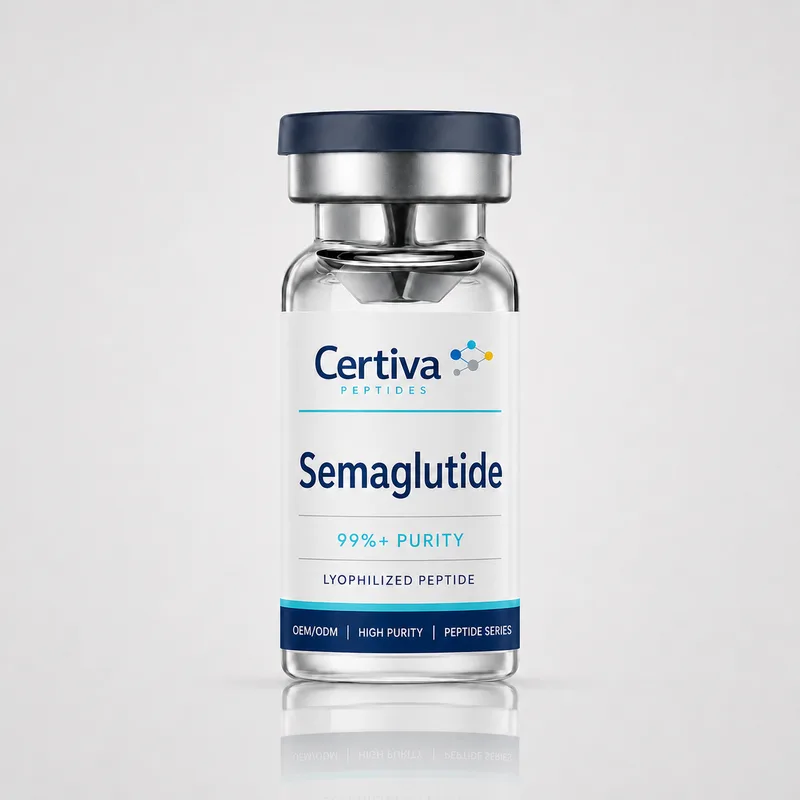
| Semaglutide | 5, 10, 15, 20, 30 and 50 mg | 10 vials |
Buyers can request:
- the current batch COA;
- HPLC purity and identity information;
- available vial specifications;
- packaging and storage details;
- stocked, bulk, and custom quantities; and
- a destination-based quote and lead time.
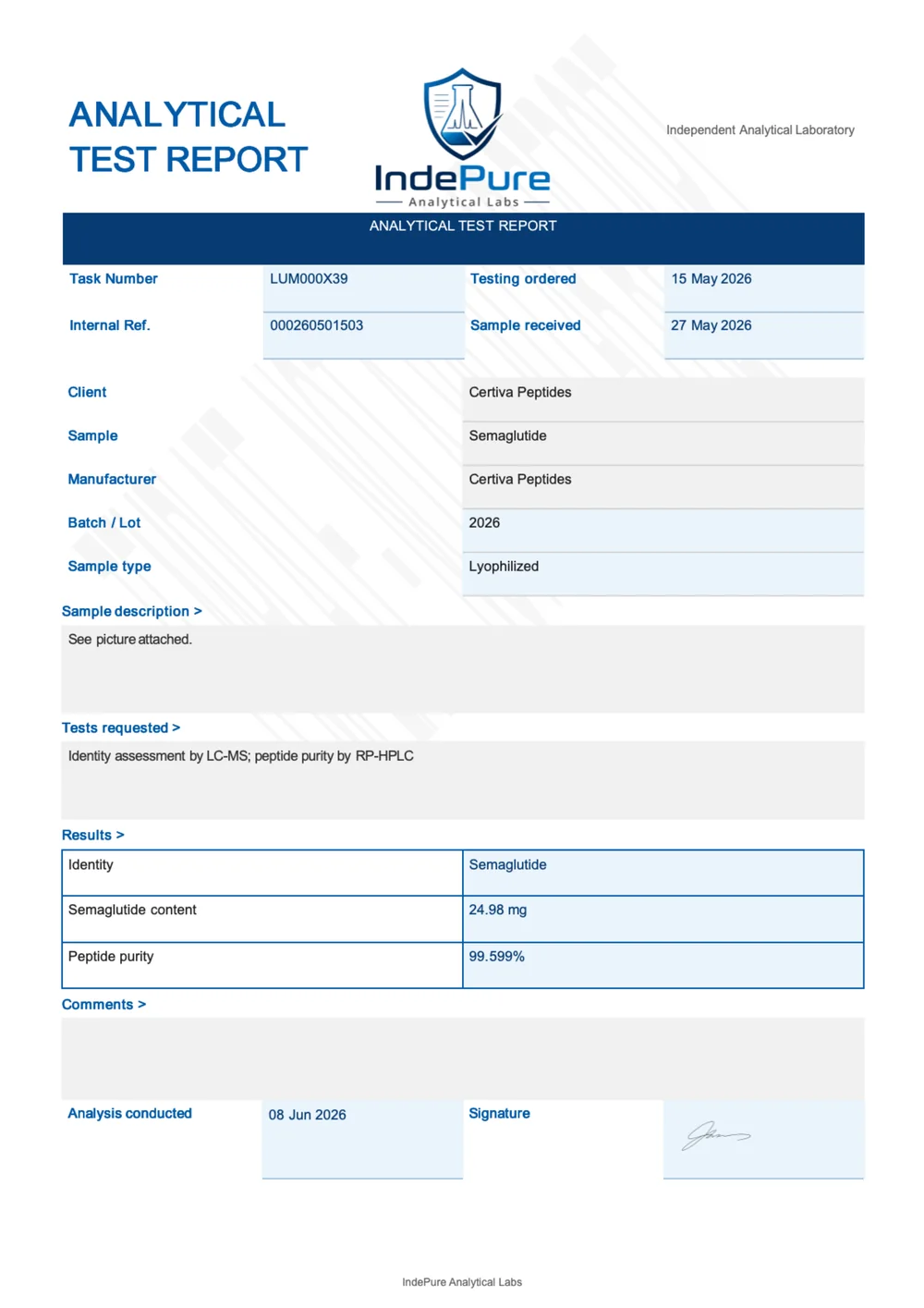
Certiva also publishes a current Semaglutide batch COA showing 99.599% HPLC purity for that specific 2026 lot. Cagrilintide buyers can request the applicable current batch report with their inquiry.
How to interpret the Cagrilintide–Semaglutide comparison
Semaglutide won the stand-alone weight-loss number; cagrilintide brought the amylin pathway that made the combination stand out.
Semaglutide is the stronger stand-alone performer in REDEFINE 1. Cagrilintide is the pathway-expander: it gives researchers an amylin signal that GLP-1 alone cannot provide.
The CagriSema result shows why both products matter. The two-pathway combination produced more average weight loss than either peptide alone.
Compare current Cagrilintide and Semaglutide lots
A useful comparison request should name Cagrilintide, Semaglutide, or both, then state the vial format, quantity, destination, and required analytical evidence. Certiva will return the available lots and matching documents side by side.
View Cagrilintide specifications · View Semaglutide specifications · Learn how to read a peptide COA
Request both current COAs + a comparison quote →
Sources and further reading
- Novo Nordisk: REDEFINE 1 CagriSema, semaglutide, and cagrilintide results
- New England Journal of Medicine: REDEFINE 1
- PubMed: REDEFINE 5 CagriSema versus semaglutide
Frequently asked questions
Which is better, cagrilintide or semaglutide?
Semaglutide won the stand-alone weight-loss number; cagrilintide brought the amylin pathway that made the combination stand out.
What is the main difference between cagrilintide and semaglutide?
Cagrilintide is a long-acting amylin analog. Semaglutide is a GLP-1 receptor agonist. Both affect appetite and fullness through different receptor systems.
Which produced more weight loss in REDEFINE 1?
When researchers estimated the effect if everyone stayed on treatment, semaglutide averaged 16.1% weight loss, cagrilintide averaged 11.8%, and their CagriSema combination averaged 22.7% at 68 weeks.
Can cagrilintide and semaglutide work together?
Yes. CagriSema is the clinical combination of cagrilintide and semaglutide. It combines amylin and GLP-1 signaling.
Is CagriSema the same as Retatrutide plus Cagrilintide?
No. CagriSema contains cagrilintide and semaglutide. Retatrutide plus Cagrilintide is a different two-component research blend.
Can buyers compare Certiva cagrilintide and semaglutide before ordering?
Yes. Buyers can compare vial specifications and request current batch COAs, availability, bulk options, lead time, and a destination-based quote before ordering.
For research use only. Not for human consumption. This article is educational and makes no medical, therapeutic, or dosing claims.
← More gLP-1 & weight management guides · Have a question? Start an inquiry →