


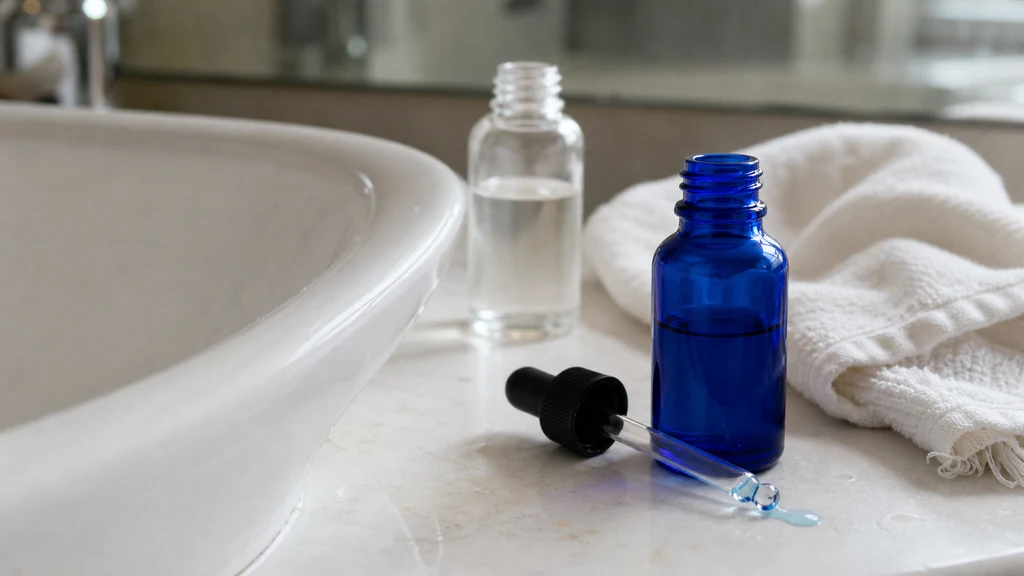
The word “peptide” on the front of a serum can add excitement—and sometimes $40—to the price. It does not tell you which peptide is inside or what that ingredient was chosen to do.
Peptides in skincare can support smoother, firmer-looking skin.
The useful question is not “Does this bottle contain peptides?” It is which peptide, for which skin goal?
Ask about cosmetic peptide actives and OEM options →
Which skincare peptide matches your goal?
Start with the result you want the product to communicate.
Fine lines
Choose Matrixyl
The clearest wrinkle-focused option, backed by a 12-week placebo-controlled facial study.
Skin renewal
Choose GHK-Cu
The famous blue copper peptide for premium collagen- and skin-quality formulas.
Expression lines
Choose SNAP-8
A line-focused peptide used in forehead, eye-area, and multi-peptide concepts.
What are peptides in skincare?
Peptides are short chains of amino acids. Amino acids are the same small building blocks the body uses to make larger proteins such as collagen and elastin.
In skincare, peptides are selected because they can interact with processes connected to:
- collagen and the skin’s supporting structure;
- visible fine lines and wrinkles;
- skin texture and firmness;
- hydration and barrier quality; and
- the environment around the scalp and hair follicle.
Different peptide structures have different jobs. That is why “multi-peptide serum” and “copper peptide serum” are not interchangeable phrases.
The formula matters too. A good cosmetic product must keep the active stable, deliver it in a comfortable base, use suitable packaging, and survive finished- product testing. The peptide is the headline ingredient; the finished formula is what reaches the skin.
Do peptides in skincare actually work?
Yes—specific peptide formulas have produced visible results in human studies.
The strongest way to judge the category is ingredient by ingredient:
- A 12-week randomized, placebo-controlled study of 93 women found that a moisturizer containing palmitoyl pentapeptide produced significantly greater improvement in fine lines and wrinkles than the same moisturizer without it.
- A 12-week randomized study of a line-targeting peptide serum found improvements in expression lines, wrinkles, and overall skin-health measurements compared with placebo.
- A clinical study of a formula containing acetyl octapeptide-3 and other actives reported a 25.8% decrease in visible fine lines and wrinkles after 12 weeks.
- A 2026 systematic review gathered 19 randomized trials with 1,341 participants and found peptide products were well tolerated while improving several visible skin-aging measurements.
That does not mean every bottle with “peptide” on the label performs the same. It means the category has real human evidence—and choosing a named, well-formulated peptide is more useful than buying a vague claim.
Matrixyl: the clearest choice for fine lines
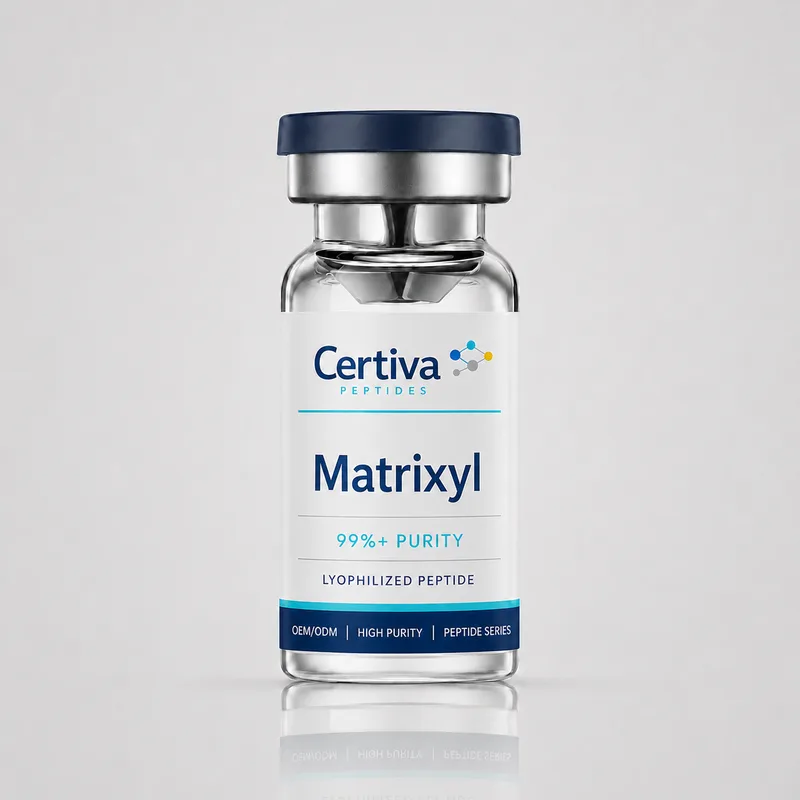
Matrixyl is the familiar trade name associated with palmitoyl pentapeptide. On an ingredient list, shoppers may see Palmitoyl Pentapeptide-4.
Its commercial story is simple: it is a wrinkle-focused signaling peptide used to support smoother, firmer-looking skin.
The best-known human study compared two nearly identical moisturizers. One contained the peptide; the other did not. After 12 weeks, the peptide side showed significantly greater improvement in fine lines and wrinkles through both technical imaging and expert grading.
That makes Matrixyl easy to position in:
- anti-aging facial serums;
- eye creams;
- night creams;
- firming moisturizers; and
- multi-peptide products.
View Certiva Matrixyl cosmetic active specifications.
GHK-Cu: the blue copper peptide
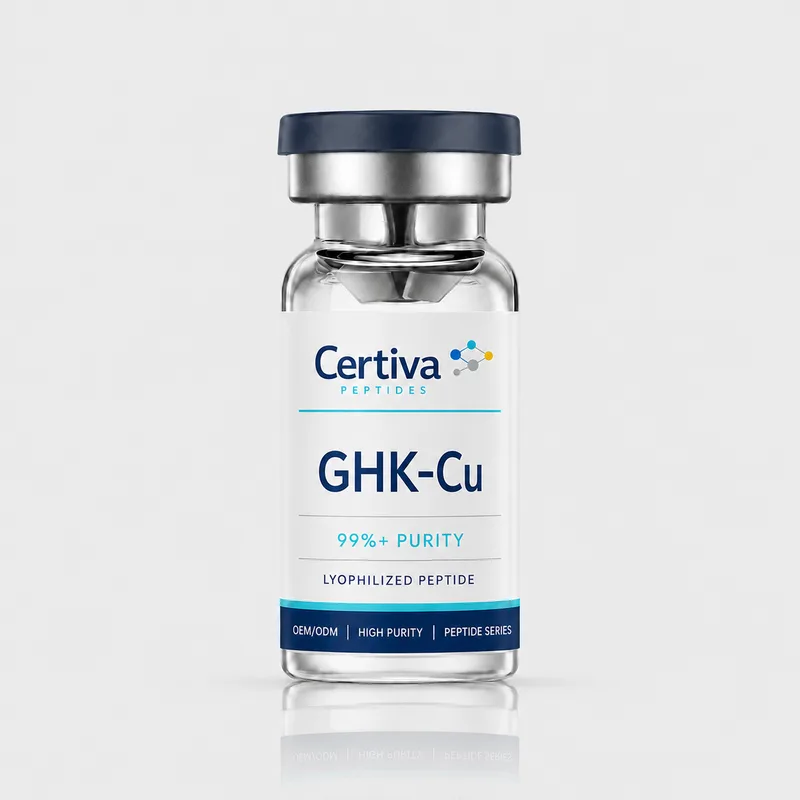
GHK-Cu is a three-amino-acid peptide carrying copper. Cosmetic labels commonly call it Copper Tripeptide-1.
Its natural blue color gives formulators an immediate visual story, but the ingredient is more than a social-media color trend. Research has connected GHK-Cu with collagen production, skin-supporting cells, and remodeling of the material surrounding those cells.
For consumers, the simple positioning is:
GHK-Cu is the premium skin-renewal peptide.
It fits formulas built around:
- smoother-looking texture;
- firmer-looking skin;
- post-stress skin support;
- visible skin quality; and
- scalp and hair-density care.
GHK-Cu is especially useful when a brand wants a recognizable hero ingredient with a strong science-and-luxury story.
Explore Certiva GHK-Cu (Copper Tripeptide-1) or read our consumer guide to copper peptides for hair growth.
Brands moving from ingredient research to a finished serum can use the 2026 copper peptide OEM buyer guide to plan the formula brief, testing, packaging, MOQ, and repeat-order path.
SNAP-8: the expression-line specialist
SNAP-8 is commonly listed as Acetyl Octapeptide-3.
It is used in formulas focused on the visible lines created by repeated facial expressions—the forehead, between the brows, and around the eyes.
That makes SNAP-8 a natural fit for:
- targeted line serums;
- eye-area products;
- forehead treatments;
- smoothing primers; and
- multi-peptide anti-aging formulas.
In a 12-week clinical study, a microneedle patch formula containing acetyl octapeptide-3 and other skin-supporting actives reduced the appearance of fine lines and wrinkles by 25.8%. The useful commercial lesson is that SNAP-8 works well as part of a thoughtfully built expression-line formula.
See Certiva SNAP-8 cosmetic active.
AHK-Cu: the copper-peptide option for scalp care
AHK-Cu is related to GHK-Cu, but it is a different copper peptide.
It is especially interesting for scalp and hair-density concepts. A laboratory study using human hair follicles found that AHK-Cu encouraged follicle growth and supported the dermal papilla cells found at the base of the follicle.
That gives AHK-Cu a clear role in:
- scalp serums;
- hair-density formulas;
- copper-peptide hair treatments; and
- premium skin-and-hair product lines.
For a face-first anti-aging story, GHK-Cu is the more recognized consumer name. For a scalp-first project, AHK-Cu creates a more focused formulation story.
Compare Certiva AHK-Cu cosmetic active.
GHK-Cu vs Matrixyl vs SNAP-8 vs AHK-Cu
| Peptide | Name to look for | Best consumer-facing story | Popular product formats |
|---|---|---|---|
| Matrixyl | Palmitoyl Pentapeptide-4 | Fine lines, wrinkles, firmer-looking skin | Face serum, eye cream, moisturizer |
| GHK-Cu | Copper Tripeptide-1 | Skin renewal, visible skin quality, premium copper peptide | Blue serum, cream, scalp serum |
| SNAP-8 | Acetyl Octapeptide-3 | Expression lines around the forehead and eyes | Targeted serum, eye product, primer |
| AHK-Cu | Copper peptide / product-specific INCI | Scalp environment and hair-density concepts | Scalp serum, hair treatment |
There is no need to force one peptide to do every job. A clear product chooses one hero story or combines complementary peptides in a formula that is easy to understand.
How can you spot a real peptide serum?
Ignore the large word on the front for a moment. Turn the bottle around.
1. Look for the specific peptide name
Useful names include:
- Copper Tripeptide-1;
- Palmitoyl Pentapeptide-4;
- Acetyl Octapeptide-3; and
- other clearly identified peptide INCI names.
“Peptide complex” can be a helpful front-label phrase, but the ingredient list should reveal what is actually inside.
2. Match the peptide to the promise
A fine-line serum should contain a peptide with a line-focused story. A copper peptide product should name the copper peptide. A scalp serum should use ingredients that support the scalp-and-hair concept.
The tighter the connection, the easier it is to understand what you are buying.
3. Judge the complete formula
Peptides do not replace the basics. A strong routine still benefits from:
- daily sunscreen;
- a comfortable cleanser;
- reliable moisturization; and
- consistent use.
Peptides add a targeted benefit to that foundation.
4. Give it enough time
Hydrating ingredients can make skin feel softer quickly. Peptide studies usually judge visible line, texture, and firmness changes over 8 to 12 weeks.
Take a photograph in the same lighting before starting, then compare again after two or three months. That is more useful than checking the mirror every morning.
Can you use more than one peptide?
Yes. A multi-peptide formula can create a broader and more memorable product:
- Matrixyl for fine lines;
- GHK-Cu for skin-renewal support; and
- SNAP-8 for expression-line positioning.
The advantage is not simply a longer ingredient list. It is the ability to support several related cosmetic goals in one routine.
For brands and formulators, the combination should be confirmed through compatibility, stability, packaging, and finished-product testing. Certiva can help compare raw-material options before an OEM or private-label project moves into prototyping.
What should brands request from a peptide supplier?
A compelling claim starts with a well-documented ingredient. Before ordering, request:
- the exact peptide and INCI name;
- the available raw-material specification;
- identity and purity documentation;
- the current lot or batch information;
- packaging and storage guidance;
- minimum order quantity and lead time; and
- OEM, private-label, or custom-formulation options.
Certiva supplies GHK-Cu, AHK-Cu, Matrixyl, and SNAP-8 for professional cosmetic formulation.
Our third-party testing guide explains how to connect a testing claim with the batch, laboratory, method, and result.
For consumers comparing professional treatments with daily skincare, our plain-English skin-booster guide explains the difference between hydration-focused injectables, dermal filler, and topical peptide formulas.
Match the peptide to the skincare goal
Peptides in skincare can support smoother, firmer-looking skin.
Choose the peptide that matches the story:
- Matrixyl for fine lines and wrinkles;
- GHK-Cu for premium skin-renewal support;
- SNAP-8 for expression-line formulas; and
- AHK-Cu for scalp and hair-density concepts.
The front of the bottle sells “peptides.” The ingredient name tells you what you are actually getting.
Compare the closest choices in GHK-Cu vs AHK-Cu and Matrixyl vs SNAP-8.
Build a peptide skincare product with Certiva
Tell us the market, product format, target claim, quantity, and peptide ingredients you are considering. Certiva can help compare cosmetic actives, documentation, bulk supply, and OEM or private-label options.
Request cosmetic peptide specifications + a quote →
Sources and further reading
- 2026 systematic review of oral and topical peptides for skin aging
- Palmitoyl pentapeptide study in 93 women
- Randomized study of a line-targeting peptide serum
- Acetyl octapeptide-3 combination study
- GHK-Cu and collagen synthesis
- AHK-Cu and human hair follicles
Frequently asked questions
Do peptides in skincare work?
Peptides in skincare can support smoother, firmer-looking skin. Human studies have reported improvements in fine lines, wrinkles, texture, hydration, and radiance from specific peptide formulas.
Which peptide is best for wrinkles?
Matrixyl, commonly listed as Palmitoyl Pentapeptide-4, has a clear wrinkle-focused story. In a 12-week placebo-controlled study of 93 women, a moisturizer containing the peptide produced significantly greater improvement in fine lines and wrinkles than the same moisturizer without it.
What does GHK-Cu do for skin?
GHK-Cu, also called Copper Tripeptide-1, is a copper-carrying peptide used in premium skin-renewal formulas. Research connects it with collagen support, extracellular-matrix remodeling, and improved skin-quality signals.
What is SNAP-8 used for in skincare?
SNAP-8, or Acetyl Octapeptide-3, is positioned for the appearance of expression lines, especially around the forehead and eyes. It is commonly used in line-focused serums, eye products, and multi-peptide formulas.
How long do peptide skincare products take to work?
A well-formulated serum can make skin feel hydrated quickly, while visible line, texture, or firmness changes are usually judged over several weeks. Many peptide skincare studies measure results at 8 to 12 weeks.
Can a skincare formula contain more than one peptide?
Yes. Multi-peptide formulas can combine different cosmetic stories, such as Matrixyl for fine lines, GHK-Cu for skin-renewal support, and SNAP-8 for expression-line care. The complete formula still needs compatibility, stability, and finished-product testing.
Does Certiva supply cosmetic peptides for formulation?
Yes. Certiva supplies GHK-Cu, AHK-Cu, Matrixyl, and SNAP-8 cosmetic actives for professional formulation, bulk supply, OEM, and private-label projects, with identity and purity documentation available on request.
Educational content only. Cosmetic ingredients and finished products are not interchangeable, and this article does not diagnose or treat hair or skin conditions. Follow the finished-product label and ask a qualified healthcare professional about persistent concerns.
← More skin & hair peptides guides · Have a question? Start an inquiry →