


An OEM project can be delayed by one missing box measurement.
That is why peptide OEM is not a logo swap. It is a chain of product, quality, packaging, artwork, and commercial approvals.
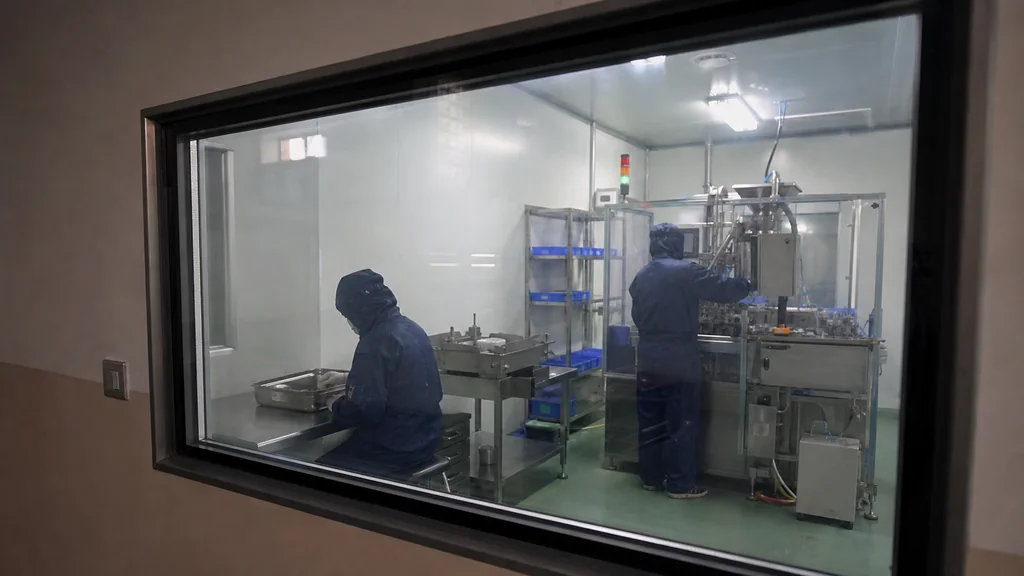
A peptide OEM manufacturer should manage the buyer-approved specification, production scope, testing, packaging, artwork control, batch release, change control, and delivery plan. Give every approval an owner before production starts.
What is a peptide OEM manufacturer?
OEM means original equipment manufacturer. In a peptide project, the buyer usually provides a product and packaging brief, and the manufacturer produces to the agreed scope.
That scope may include:
- a buyer-defined product specification;
- selected vial strength or bulk form;
- agreed quality tests and documents;
- buyer-approved labels and cartons;
- a fixed commercial quantity;
- a repeat-order brief; and
- destination-based shipping.
Some suppliers use “OEM” for any branded order. Others reserve it for custom work. Read peptide OEM vs ODM first, then make the written scope more important than the label.
The 10-point peptide OEM manufacturer checklist
1. Confirm the company and factory relationship
Ask who performs each part of the order:
- product manufacturing;
- testing;
- filling or lyophilization, when applicable;
- labeling;
- secondary packaging;
- batch release;
- storage; and
- shipping.
One company may perform every step, or approved partners may share the work. The buyer needs a clear answer either way.
ICH Q10 says outsourced work should be assessed, responsibilities should be defined, performance should be monitored, and purchased materials should follow an agreed supply chain. It is a useful high-level model for a serious B2B review.
2. Freeze one product specification
The specification is the master reference for production and approval.
It should identify:
- exact peptide, blend, or cosmetic active;
- strength or contents;
- product form;
- purity and identity requirements;
- any buyer-specific test requirements;
- storage conditions;
- research or cosmetic product category; and
- approved revision number and date.
The quote, label, COA review, and purchase order should use the same product name and strength.
3. Define the test and document package
“COA included” is not a complete quality brief.
Agree on:
- product specification;
- batch-specific Certificate of Analysis;
- HPLC purity information;
- mass-spectrometry identity support;
- applicable third-party report;
- packaging specification;
- approved artwork proof;
- origin information;
- invoice and packing list; and
- export or shipping documents.
Use HPLC vs mass spectrometry to understand why purity and identity answer different questions.
Finished formulas also need a time-based plan. Use our peptide OEM stability-testing guide to define the formula, package, conditions, timepoints, limits, and decision owners.
4. Approve every physical component
Make a component list rather than saying “standard packaging.”
| Level | Items to approve |
|---|---|
| Primary | Vial or container, closure, seal, direct label |
| Secondary | Box, divider, tray, insert |
| Shipping | Inner carton, master carton, cushioning, carton marks |
For each item, record the material, dimensions, color, quantity, supplier option, and approval status.
Our peptide packaging guide provides a deeper component checklist.
5. Control label and artwork versions
The artwork process should name who:
- supplies the template;
- writes the copy;
- checks the product and strength;
- reviews category-appropriate statements;
- creates the print file;
- approves the proof;
- archives the final version; and
- removes obsolete files.
The final approval should show the file name, revision, date, and approver. Do not approve artwork only through a screenshot in a chat thread.
Research-use-only positioning should remain consistent across the package, website, and sales conversation. Finished cosmetic products follow a separate market and labeling path.
6. Separate product MOQ from packaging MOQ
An OEM quote can contain several minimums:
- product production MOQ;
- vial or container MOQ;
- printed label MOQ;
- printed carton MOQ;
- insert MOQ; and
- master-carton quantity.
A brand may order 500 finished units but pay for 1,000 printed boxes if that is the component minimum. Ask who owns and stores the unused components.
Read our peptide MOQ guide before comparing suppliers.
7. Build lead time from approval gates
Do not accept one unexplained number.
Break the project into:
- specification review;
- sample or component approval;
- artwork approval;
- material readiness;
- production;
- quality control and release;
- packaging;
- export preparation; and
- transit.
Then identify which event starts the clock. A “four-week lead time” has little meaning if it begins only after final artwork and all materials are ready.
8. Put change control in writing
The manufacturer should tell the buyer before changing an approved item that can affect the order.
Define notice and approval rules for:
- product specification;
- manufacturing site;
- material source;
- test method;
- vial, closure, or label;
- box structure;
- artwork file;
- batch-number format; and
- shipping origin.
This is how an OEM brief survives the move from the first order to the fifth.
9. Approve the complete commercial quote
The final quote or purchase record should include:
- exact product and strength;
- total finished units or bulk quantity;
- included testing and documents;
- every packaging component;
- setup, development, and printing costs;
- product and component MOQs;
- unit price and currency;
- payment schedule;
- lead-time starting point;
- shipping term and destination;
- unused-component ownership; and
- quote validity.
Compare the landed cost, not only the unit price.
10. Run a first-order release check
Before shipment, match:
- approved product specification;
- batch number and COA;
- vial or container;
- label version;
- box and insert;
- finished unit count;
- carton count;
- packing list; and
- shipping details.
Photographs can support the check, but they do not replace documents and physical receiving inspection.
Who owns each OEM approval?
| Decision | Brand | Manufacturer | Shared |
|---|---|---|---|
| Product brief | Lead | Review feasibility | Yes |
| Product specification | Approve | Draft or confirm | Yes |
| Test plan | State needs | Confirm methods | Yes |
| Artwork copy | Lead | Technical review | Yes |
| Print production | Approve proof | Manage output | Yes |
| Batch release | Review agreed documents | Perform release process | Yes |
| Market claims | Own | Flag production mismatch | No |
| Shipping plan | State destination | Quote and coordinate | Yes |
The contract should name the real owner. A shared box is not permission for both sides to assume the other side handled it.
Questions to send a peptide OEM supplier
Ask these before paying a setup fee:
- Which steps do you perform at your own facility?
- Which steps are outsourced, and how are they controlled?
- What is the exact product and packaging MOQ?
- Which tests and documents are standard?
- Which items require buyer approval?
- When does the lead-time clock start?
- Who owns unused labels and cartons?
- What changes require notice?
- What will be checked before release?
- What information do you need for a firm quote?
For a full qualification process, use our peptide supplier audit checklist.
Why brands discuss peptide OEM with Certiva
Certiva manufactures at its own facility and evaluates B2B projects for research peptides and appropriate professional cosmetic categories. Depending on the brief, buyers can discuss:
- bulk and wholesale quantities;
- custom OEM projects;
- private-label packaging;
- batch-linked documents;
- HPLC and mass-spectrometry support;
- standard and custom packaging; and
- destination-based quotes.
The available path depends on the product, specification, quantity, documents, components, destination, and target date.
Qualify the OEM process before approving artwork
The best peptide OEM manufacturer makes every approval visible before it becomes a delay.
Approve the product, proof, package, batch, price, and delivery plan as one system.
Research peptides are supplied for laboratory research use only and are not for human consumption.
Request a peptide OEM project review
Send Certiva the product, quantity, specification, packaging brief, document needs, destination, and target date. We will confirm the applicable OEM, private-label, wholesale, or standard-supply route.
Send an OEM brief + request a quote →
Sources and further reading
- ICH Q10: management of outsourced activities and purchased materials
- ICH Q7 questions and answers: contract manufacturing responsibilities
Frequently asked questions
What should a peptide OEM manufacturer manage?
A peptide OEM manufacturer should manage the buyer-approved specification, production scope, testing, packaging, artwork control, batch release, change control, and delivery plan.
What should a brand approve before peptide OEM production?
The brand should approve the product specification, quality documents, physical components, artwork proof, quantity, price, lead-time basis, shipping term, and final purchase record.
Is peptide OEM the same as private label?
Not always. Private label often applies the buyer's brand to an existing product, while OEM usually starts with more buyer-controlled requirements. The written scope matters more than the acronym.
What documents should an OEM peptide supplier provide?
The agreed package may include the product specification, batch-specific COA, identity and purity support, packaging specification, approved artwork proof, invoice, packing list, and shipping documents.
Does Certiva support peptide OEM projects?
Yes. Certiva evaluates custom OEM and private-label projects after the buyer provides the product, quantity, specification, packaging brief, document needs, destination, and target date.
For research use only. Not for human consumption. This article is educational and makes no medical, therapeutic, or dosing claims.
← More sourcing & supply guides · Have a question? Start an inquiry →