


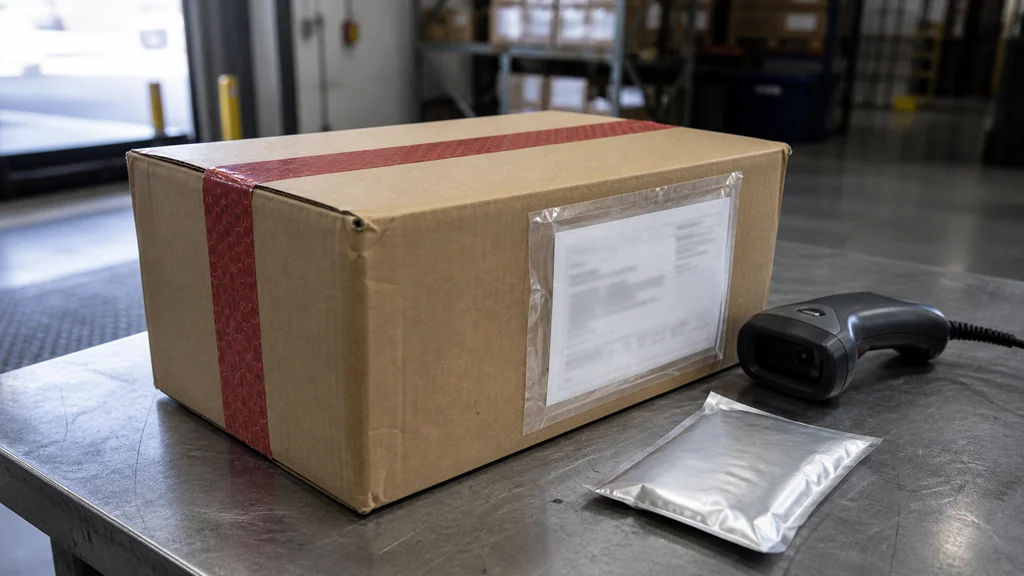
A U.S. return address can tell you where a parcel goes back.
It cannot tell you where the peptide was made.
To verify peptide supplier origin, ask who manufactures, tests, fills or lyophilizes, labels, stores, and ships the product. Then connect those answers to the quoted batch and documents. A clear supply chain matters more than a vague “factory direct” badge.
What does peptide supplier origin mean?
Origin is more than one country field.
For a B2B buyer, it means understanding the path from manufacturing to the final shipment:
- where the product is manufactured;
- who performs each quality test;
- where filling or lyophilization occurs, when applicable;
- who labels and packs the finished units;
- where released inventory is stored;
- which legal company sells the order; and
- where the parcel begins its final journey.
These steps may happen at one site or across approved partners. Transparency does not require one building. It requires a traceable relationship between the product, batch, companies, and records.
Manufacturer, supplier, distributor, or relabeler?
The roles are different:
| Role | Main job | Origin question to ask |
|---|---|---|
| Manufacturer | Makes and prepares the product | Which site made this batch? |
| Direct manufacturer-supplier | Makes and sells the product | Can the seller connect the quote to factory and batch records? |
| Distributor | Buys and resells products | Who is the approved manufacturer for this item? |
| Private-label seller | Sells under its own brand | Who owns the specification and quality decisions? |
| Fulfillment partner | Stores and ships inventory | Does the warehouse keep batch identity intact? |
A distributor is not automatically a weak supplier. A manufacturer is not automatically a strong one. The buyer still needs product, batch, test, package, and shipping evidence.
Read our broader peptide supplier vs manufacturer guide for the role comparison. This page focuses specifically on origin and chain of custody.
Why a shipping address is not a manufacturing address
Many companies use local warehouses, fulfillment centers, freight forwarders, or return addresses. These services can shorten delivery and simplify returns.
However, the parcel origin does not prove:
- where synthesis occurred;
- who purified the product;
- where the batch was tested;
- who filled or lyophilized it;
- who released it; or
- whether the seller controls the manufacturing relationship.
Ask for both addresses when relevant:
- manufacturing site: where the product was made; and
- shipping site: where the released order entered the delivery network.
Do not treat the difference as a problem by itself. Treat an unexplained difference as a question that still needs an answer.
The six-link origin check
1. Legal seller to manufacturing site
Confirm the legal company on the quote, invoice, payment instruction, and contract. Then ask how that company is connected to the manufacturing site.
Possible relationships include:
- owned facility;
- parent or sister company;
- approved contract manufacturer;
- authorized distributor; or
- private-label customer.
Record the answer. “Our factory” is not a complete relationship description.
2. Manufacturing site to product specification
The supplier should identify which product and specification the site supports.
Check:
- exact peptide or blend;
- strength or bulk form;
- target purity and identity requirements;
- product category;
- package configuration; and
- specification revision.
A factory relationship for one product does not automatically qualify every item in a large catalog.
3. Product specification to batch
Connect the approved specification to the actual lot being offered.
The batch-specific COA should identify the product and lot. The vial, label, quote, and packing list should use matching identifiers where applicable.
Use our batch traceability guide to review this chain one document at a time.
4. Batch to testing party
Ask who performed each test and who reviewed the result.
Common questions include:
- Which lab ran HPLC?
- Which lab ran mass spectrometry?
- Is the report current and batch-specific?
- Did the seller test the same lot being offered?
- Can the batch number be matched across documents?
Independent testing can add useful evidence, but the lab name alone is not enough. The sample identity and chain of custody still matter.
Read what third-party tested means before using an outside-lab logo as the only proof.
5. Released batch to package
The package should preserve identity after testing and release.
Check:
- product and strength;
- batch field;
- label revision;
- vial or container count;
- box and carton count;
- tamper evidence where applicable; and
- packing-list match.
For OEM and private-label projects, identify whether packaging happens at the manufacturing site or a separate approved location.
6. Package to shipment
The final shipment should keep the batch trail intact.
Ask for:
- seller and shipper names;
- ship-from location;
- carton count;
- packing list;
- carrier and service;
- tracking reference;
- temperature protection when required; and
- damage or discrepancy process.
This is where the chain reaches the buyer’s receiving desk.
What should a transparent peptide supplier disclose?
A qualified B2B buyer should be able to request clear answers about:
- legal seller;
- manufacturing relationship;
- manufacturing country and site information;
- testing responsibility;
- current batch and document scope;
- packaging location;
- storage and fulfillment path;
- shipping origin; and
- change-notification process.
Some detailed business or factory documents may be shared privately rather than posted publicly. That is normal. The supplier should still explain what can be reviewed during qualification.
Documents that support origin and traceability
Depending on the order, the evidence package may include:
- legal company information;
- manufacturing-site information;
- product specification;
- batch-specific COA;
- identity and purity reports;
- third-party test report;
- packaging specification;
- invoice;
- packing list;
- country-of-origin information; and
- export or shipping documents.
No single document proves the full chain. Look for agreement across the set.
ICH Q10 recommends assessing outsourced parties, defining responsibilities in writing, monitoring performance, and ensuring incoming materials come from approved sources through an agreed supply chain. ICH Q7’s questions and answers also note that manufacturing can include production, packaging, relabeling, quality control, release, storage, and distribution. Those definitions explain why a buyer should map more than the synthesis step.
Red flags that deserve a follow-up
Pause and ask more questions when:
- the seller will not name its role;
- the payment company does not match the approved seller;
- the manufacturing country changes between answers;
- a generic COA has no batch connection;
- the same report appears across unrelated products;
- the supplier claims “made here” but only shows a warehouse;
- label, COA, quote, and packing list use different product names; or
- a site or source changes without notice.
A follow-up is not an accusation. It is supplier qualification.
How to compare direct and reseller quotes fairly
Compare more than price.
Score each supplier on:
- product definition;
- manufacturing transparency;
- current-batch evidence;
- testing clarity;
- packaging control;
- lead time;
- destination-based landed cost;
- change notification; and
- repeat-order support.
A strong distributor may offer local inventory and service. A direct manufacturer may offer a shorter path to production details and OEM options. Choose the model that can support the order while keeping the batch trail clear.
Certiva’s direct supply model
Certiva manufactures at its own facility in China and supplies research peptides directly. Qualified buyers can discuss:
- current product and batch availability;
- bulk and wholesale quantities;
- private-label and custom OEM projects;
- batch-specific documentation;
- HPLC and mass-spectrometry support;
- packaging requirements; and
- worldwide destination-based quotes.
We can also provide applicable company, factory, quality, packaging, and commercial information privately during a B2B qualification review.
Origin is a chain, not a flag
Origin is a chain, not a flag on a webpage.
Know who makes, tests, packs, stores, sells, and ships the product. Then confirm that the same batch stays visible from quote to receiving inspection.
Research peptides are supplied for laboratory research use only and are not for human consumption.
Request supplier and batch information
Send Certiva the product, quantity, document needs, destination, and target date. We will confirm the available supply route and applicable qualification materials.
Request origin, batch documents + quote →
Sources and further reading
- ICH Q10: outsourced activities and agreed supply chains
- ICH Q7 questions and answers: manufacturing and outsourced responsibilities
Frequently asked questions
How do I verify peptide supplier origin?
Ask who manufactures, tests, fills or lyophilizes, labels, stores, and ships the product, then connect those answers to the quoted batch and documents.
Does a U.S. shipping address prove a peptide was made in the United States?
No. A shipping or return address shows where a parcel moves from or returns to; it does not by itself identify the manufacturing site.
Is buying from a peptide relabeler always bad?
No. A distributor or private-label seller can be a useful supplier when the original product, manufacturing relationship, batch documents, quality responsibilities, and shipping path remain clear.
What documents help verify peptide supply-chain origin?
Useful evidence may include the product specification, batch-specific COA, manufacturing-site information, packing list, origin information, and records linking the batch to the shipped product.
Is Certiva a direct peptide manufacturer and supplier?
Yes. Certiva manufactures at its own facility in China and supplies research peptides directly, with batch-linked documents and B2B support for qualified inquiries.
For research use only. Not for human consumption. This article is educational and makes no medical, therapeutic, or dosing claims.
← More sourcing & supply guides · Have a question? Start an inquiry →