


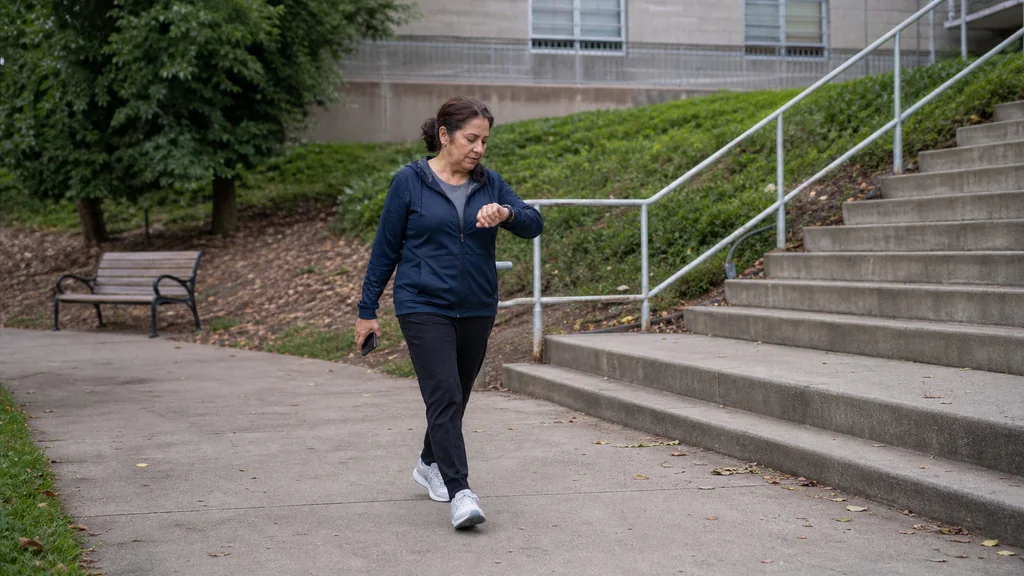
The scale can move down while the step count stays flat.
No clear evidence shows that GLP-1 treatment makes people exercise more. A 2026 review of seven studies involving 924 adults found mostly unchanged physical activity and a possible small drop in spontaneous daily movement.
That answer matters because “losing weight” and “moving more” are two different outcomes.
What did the 2026 review actually find?
Researchers reviewed studies that used objective measurements such as step counts, sedentary time, and activity intensity. Self-reported guesses were not the main evidence.
The headline results were:
- seven studies from six independent trials were included;
- the combined sample was 924 adults with overweight or obesity;
- most studies found no statistically significant difference in activity;
- five of seven studies showed numerically lower free-living activity in the GLP-1 group;
- one study reported 1,144 fewer steps per day; and
- the main pooled analysis found no significant overall effect.
A sensitivity analysis suggested a modest reduction, but it depended on which studies and methods were included. That makes the result a signal worth watching, not a final verdict.
What is “free-living physical activity”?
It is the movement people do during normal life:
- walking to a car or bus;
- standing while doing chores;
- shopping and running errands;
- taking stairs;
- moving around at work; and
- unplanned walking throughout the day.
It is different from a scheduled gym session or prescribed exercise program.
Think of activity as two buckets. One holds planned workouts. The other holds all the small movements between workouts. The 2026 review suggests the second bucket may not automatically fill up when body weight falls.
Did GLP-1 treatment reduce exercise ability?
The review did not show a clear reduction in structured exercise participation. Exercise adherence and prescribed exercise duration were similar between the GLP-1 and comparison groups.
That distinction is important. A person can still complete planned exercise but spend more of the remaining day sitting or moving less. Conversely, someone may walk more without joining a formal exercise program.
The data point more toward possible changes in spontaneous movement, not a proven loss of exercise capacity.
Why wouldn’t weight loss automatically increase movement?
It sounds logical that a lighter body should feel easier to move. Real behavior is more complicated.
Possible influences include:
- lower energy intake;
- fatigue or gastrointestinal symptoms;
- existing joint or muscle discomfort;
- routines that do not change with body weight;
- loss of some lean mass during weight loss; and
- the body’s normal tendency to conserve energy.
These are possible explanations, not conclusions about every person. The review was designed to measure activity, not prove one universal cause.
Is 1,144 fewer steps per day the average for everyone?
No. That number came from one study, not the full pooled dataset.
It is useful because it turns an abstract signal into something familiar. It should not be presented as the expected result for every GLP-1 user.
Across all included studies, the primary pooled analysis did not find a statistically significant overall change. The honest conclusion is therefore: activity usually did not clearly rise, and there may be a small downward signal in everyday movement.
How does this connect to the GLP-1 muscle conversation?
Body weight does not show what was lost. Weight reduction can include fat, water, and lean tissue. Activity does not show the full picture either, but movement and resistance exercise are relevant when people discuss strength and muscle function.
A separate 2026 systematic review of randomized trials concluded that lean-mass loss should not automatically be treated as a reason to reject GLP-1 medicines for obesity. The more useful question is whether strength, function, diet, and body composition are being considered together.
Our guide to GLP-1 muscle loss and the 2026 apitegromab trial explains one investigational attempt to preserve more lean mass during tirzepatide treatment.
Does appetite suppression explain the activity result?
Not by itself.
GLP-1 receptor agonists can affect appetite and food intake, but the 2026 activity review did not establish that appetite change directly caused lower movement.
Our article on how GLP-1 reduces appetite and food noise explains the appetite side of the story. It should not be used to predict one person’s step count.
What should readers take from the study?
The useful takeaway is not “GLP-1 makes people inactive.” The evidence is too small and mixed for that claim.
The useful takeaway is: do not assume weight loss created more movement. Measure the outcomes separately.
Depending on the situation, a healthcare discussion may include:
- daily movement and sedentary time;
- strength and resistance exercise;
- fatigue, pain, or balance limitations;
- adequate nutrition during weight loss;
- changes in function, not only scale weight; and
- whether an activity tracker is helpful or stressful for that person.
This article does not set exercise targets or replace individualized advice.
Why the result matters to researchers
Future GLP-1 studies can tell a clearer story by measuring more than body weight. Useful outcomes include:
- objectively measured steps;
- sedentary time;
- moderate and vigorous activity;
- strength and physical function;
- body composition; and
- adherence to planned exercise.
When studies use the same definitions and measurement devices, researchers can compare results more confidently.
What the activity data actually show
GLP-1 treatment has not been shown to make people exercise more. The best 2026 review found mostly unchanged activity, with a possible small reduction in spontaneous daily movement. Planned exercise participation appeared similar.
Weight, movement, and body composition are connected, but they are not interchangeable. Measure each one instead of guessing from the scale.
Read the 2026 GLP-1 lean-mass study →
Sources and further reading
- International Journal of Obesity: 2026 systematic review of GLP-1 treatment and objective physical activity
- Endocrine Society: ENDO 2026 report on activity during GLP-1-associated weight loss
- International Journal of Obesity: 2026 review of GLP-1 treatment and muscle health
This article explains published research through August 12, 2026. It does not recommend a medicine, exercise target, diet, or personal treatment plan.
Frequently asked questions
Does GLP-1 make you exercise more?
No clear evidence shows that GLP-1 treatment makes people exercise more. A 2026 review of seven studies involving 924 adults found mostly unchanged physical activity and a possible small reduction in unplanned daily movement.
What did the 2026 GLP-1 activity review find?
Most studies found no statistically significant activity difference. Five of seven studies leaned toward less free-living activity, one reported 1,144 fewer steps per day, and the main pooled analysis found no significant overall effect.
Does lower daily movement mean exercise capacity is reduced?
Not necessarily. The review found that structured exercise participation and prescribed exercise duration were similar between groups. The possible change appeared more related to spontaneous daily movement than exercise capacity.
Why does daily movement matter during weight loss?
Walking, standing, errands, and other everyday movement contribute to total activity and may support fitness, muscle function, and long-term energy balance even when they do not feel like exercise.
Does the study prove GLP-1 treatment causes inactivity?
No. The evidence was limited to seven studies with different designs and activity measurements. The review found a possible signal, not proof that every GLP-1 medicine or every person will become less active.
What is the practical takeaway?
Weight loss should not be treated as proof that daily movement increased. People using a prescribed GLP-1 medicine can discuss activity, strength, nutrition, and individual limitations with a qualified healthcare professional.
For research use only. Not for human consumption. This article is educational and makes no medical, therapeutic, or dosing claims.
← More gLP-1 & weight management guides · Have a question? Start an inquiry →