



MariTide is Amgen’s experimental once-monthly GLP-1 medicine. It activates GLP-1, blocks GIP and produced up to about 20% average weight loss at 52 weeks in Phase 2.
The big idea is easy: one shot a month instead of one shot a week. In newer follow-up data, most participants also maintained their weight loss during a second year while using lower monthly or quarterly maintenance doses. That is why MariTide has become one of the most-watched medicines in the GLP-1 race.
The 20-second answer
Compare current metabolic research peptides →
Why does once-monthly dosing matter?
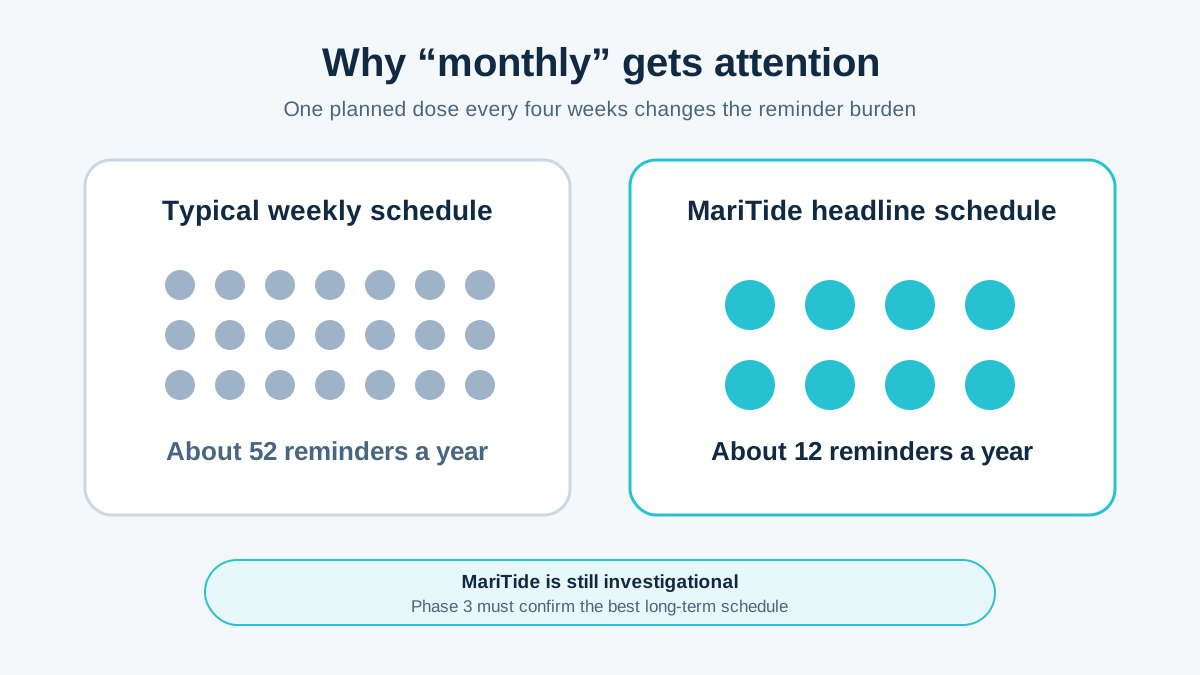
Weekly injections add up to about 52 shots a year. A monthly schedule cuts that to about 12. For people managing a long-term condition, that can mean fewer reminders, less travel planning and fewer chances to miss a dose.
MariTide may also have a maintenance advantage. Amgen reported that most people in the second part of its Phase 2 study kept their earlier weight loss while moving to lower monthly doses or injections every three months. Phase 3 still needs to confirm the best schedule, but the idea is commercially powerful: strong first-year loss followed by easier long-term maintenance.
How does MariTide work in plain English?
MariTide combines a peptide with an antibody. Think of the antibody as a large carrier that helps the active parts stay in the body longer.
It then works on two appetite pathways:
- It activates GLP-1, which can reduce appetite and help control blood sugar.
- It blocks GIP, using an antibody designed to stop that receptor signal.
That second step makes MariTide different. Tirzepatide activates both GLP-1 and GIP. MariTide activates GLP-1 but blocks GIP. Two very different strategies are trying to reach a similar goal.
The full molecule is called maridebart cafraglutide and was previously known as AMG 133. “MariTide” is the shorter name most people search.
What did the MariTide Phase 2 study find?
The main study included 592 adults. The obesity group tested several doses and schedules over 52 weeks.
Among people who stayed with the planned treatment, the strongest groups averaged about 20% weight loss at one year. Weight loss had not reached a clear plateau, meaning the average line was still moving down when the first year ended.
In the analysis that counted everyone as originally assigned—including people who stopped treatment—average loss across MariTide groups ranged from 12.3% to 16.2%, compared with 2.5% for placebo.
Both numbers are useful:
- “About 20%” shows what happened when treatment was followed as planned.
- “12.3% to 16.2%” shows the more conservative full-group view.
Nausea and vomiting were the most common side effects, especially early in treatment. Starting lower and stepping the dose up improved comfort without giving up the weight-loss result. During the second year, Amgen reported low rates of nausea and vomiting on the maintenance schedules.
MariTide vs weekly GLP-1 medicines
| MariTide | Semaglutide | Tirzepatide | |
|---|---|---|---|
| Main signals | GLP-1 activation + GIP blocking | GLP-1 activation | GLP-1 + GIP activation |
| Molecular format | Peptide-antibody conjugate | Peptide | Peptide |
| Headline schedule | Monthly | Weekly | Weekly |
| Development status | Phase 3 | Approved medicines exist | Approved medicines exist |
This is not a head-to-head result table. It shows why MariTide has a distinct place in the market: an unusual GIP-blocking design plus a longer dosing gap.
For a simpler comparison of the two established weekly research paths, read semaglutide vs tirzepatide.
Another monthly program now has its own Phase 2b data. See the berobenatide 2026 monthly GLP-1 results for a different ultra-long-acting peptide design.
What is the MARITIME Phase 3 program?
MARITIME is Amgen’s large set of Phase 3 trials for MariTide. The program is studying adults with obesity or overweight, including people with related conditions such as type 2 diabetes, heart disease and sleep apnea.
The trials are designed to answer the questions buyers, doctors and regulators care about most: how much weight people lose, how many stay on treatment, which starting plan feels best and whether less-frequent maintenance works over time.
Why MariTide matters to peptide research buyers
MariTide shows why a chemical name and a purity percentage are not enough. It is a peptide-antibody conjugate, not a standard stand-alone peptide. That changes how it is made, tested and handled.
Certiva focuses on documented metabolic research peptides such as semaglutide, tirzepatide, retatrutide and cagrilintide. Buyers can request the current batch COA and specification before ordering.
When comparing any research material, check four things:
- exact molecular identity;
- HPLC purity;
- mass-spectrometry identity;
- a batch number that matches the vial and COA.
Our plain-English COA guide and quality process explain these checks without lab jargon.
Why monthly dosing makes MariTide distinctive
MariTide is easy to remember: about 20% average weight loss at one year, a once-monthly headline schedule and the possibility of even less-frequent maintenance. Its antibody carrier and GIP-blocking design make it more than another weekly GLP-1 copy.
Request current COAs and pricing →
MariTide remains investigational and is not approved for personal use. Certiva products are supplied for laboratory research only, not for human use.
Frequently asked questions
What is MariTide?
MariTide is Amgen’s once-monthly GLP-1 and GIP-blocking conjugate. Phase 2 participants averaged up to about 20% weight loss at 52 weeks.
How often is MariTide taken in studies?
MariTide has mainly been studied as one injection every four weeks. Researchers have also tested longer gaps and lower-frequency maintenance schedules.
How much weight did people lose with MariTide?
In the Phase 2 obesity study, participants following the treatment as planned averaged up to about 20% weight loss at 52 weeks, with no weight-loss plateau.
How does MariTide work?
MariTide activates the GLP-1 receptor and blocks the GIP receptor. Its peptide parts are attached to an antibody to keep the medicine in the body longer.
Is MariTide the same as tirzepatide?
No. Tirzepatide activates GLP-1 and GIP receptors. MariTide activates GLP-1 but blocks GIP, so the two medicines use opposite GIP strategies.
Is MariTide approved?
No. MariTide is an investigational medicine in the Phase 3 MARITIME program. It is not currently approved for sale or personal use.
For research use only. Not for human consumption. This article is educational and makes no medical, therapeutic, or dosing claims.
← More gLP-1 & weight management guides · Have a question? Start an inquiry →