



Retatrutide sends three receptor signals. Its most common side effects still tell a familiar GLP-1 story: the stomach and intestines speak first.
The most common retatrutide side effects are nausea, diarrhea, constipation, and vomiting—Phase 3 reports say most were mild to moderate.
The 2026 Phase 3 results now give consumers something better than guesses: clear percentages from more than 2,300 TRIUMPH-1 participants.
See Certiva Retatrutide specifications →
What did Phase 3 show?
Digestive effects led the list, most were mild to moderate, and most participants continued treatment.
Most common
Nausea and diarrhea
These were the two most frequently reported effects across the TRIUMPH-1 dose groups.
Less familiar
Altered skin sensations
Dysesthesia appeared in the trial and was generally mild to moderate.
Status
Still investigational
Retatrutide has Phase 3 data but no FDA-approved prescribing label yet.
Retatrutide side effects at a glance
Lilly reported the following TRIUMPH-1 results:
| Side effect | 4 mg | 9 mg | 12 mg | Placebo |
|---|---|---|---|---|
| Nausea | 28.6% | 38.4% | 42.4% | 14.8% |
| Diarrhea | 25.2% | 34.1% | 32.0% | 13.5% |
| Constipation | 23.8% | 25.9% | 26.1% | 10.9% |
| Vomiting | 10.6% | 22.8% | 25.3% | 4.8% |
| Upper respiratory infection | 14.2% | 12.2% | 13.1% | 11.6% |
| Dysesthesia | 5.1% | 12.3% | 12.5% | 0.9% |
| Urinary tract infection | 7.5% | 8.8% | 8.4% | 5.3% |
Lilly said the dysesthesia and urinary-tract-infection events were generally mild to moderate, most resolved during treatment, and most participants continued taking retatrutide.
Read the full TRIUMPH-1 Phase 3 announcement.
Why are the most common effects digestive?
Retatrutide activates three receptor systems:
- GIP;
- GLP-1;
- glucagon.
GLP-1 is the familiar part of the design. Medicines that activate this pathway commonly produce nausea, diarrhea, constipation, and vomiting.
Retatrutide adds GIP and glucagon signaling, but the Phase 3 side-effect list still looks recognizably incretin-based.
The simple consumer takeaway is:
Three receptor targets created a bigger metabolic research story without changing the fact that digestive events were the most common.
For the receptor comparison, read retatrutide vs semaglutide.
Was nausea the most common retatrutide side effect?
Yes. In TRIUMPH-1, nausea was the most frequently reported effect:
- 28.6% at 4 mg;
- 38.4% at 9 mg;
- 42.4% at 12 mg;
- 14.8% with placebo.
Diarrhea followed closely. At 9 mg it was reported by 34.1%, and at 12 mg by 32.0%.
The table also shows an important commercial and research point: tolerability is part of the dose story. The 4 mg group reported lower nausea, vomiting, and dysesthesia rates than the two higher-dose groups while still producing a large average weight-loss result in the trial.
That does not select a dose for an individual. Retatrutide remains investigational, and any future approved use would depend on the completed regulatory review and label.
What is dysesthesia?
Dysesthesia means an unusual or altered skin sensation.
People may describe it as:
- tingling;
- burning;
- skin sensitivity;
- pins and needles; or
- discomfort from normal touch.
In TRIUMPH-1, dysesthesia was reported by:
- 5.1% at 4 mg;
- 12.3% at 9 mg;
- 12.5% at 12 mg;
- 0.9% with placebo.
Lilly described these events as generally mild to moderate, said most resolved during treatment, and reported that most participants continued.
This side effect deserves attention because it is less familiar than nausea or diarrhea and is likely to become a common consumer search as awareness of retatrutide grows.
Did most participants stop because of side effects?
No. Most stayed in the trial.
Discontinuation because of adverse events was:
| Group | Stopped because of adverse events |
|---|---|
| Retatrutide 4 mg | 4.1% |
| Retatrutide 9 mg | 6.9% |
| Retatrutide 12 mg | 11.3% |
| Placebo | 4.9% |
The 4 mg group’s discontinuation rate was lower than placebo in the reported TRIUMPH-1 result. The rate increased in the higher-dose groups, but most participants in every retatrutide group continued.
This is the clearest way to keep the side-effect discussion in proportion: digestive effects were common, but discontinuation was much less common.
Did other Phase 3 trials show the same pattern?
Yes. The newer TRIUMPH-2 and TRIUMPH-3 topline results again placed digestive effects at the top.
In TRIUMPH-2, the most common retatrutide events included:
- diarrhea: 27.4% to 33.6%;
- nausea: 13.7% to 28.0%;
- constipation: 14.0% to 16.8%;
- decreased appetite: 5.8% to 17.1%;
- vomiting: 5.5% to 15.7%.
TRIUMPH-3 also most often reported diarrhea, nausea, constipation, and decreased appetite.
That consistency strengthens the simple answer: the Phase 3 retatrutide safety story is led by gastrointestinal effects.
See Lilly’s TRIUMPH-2 and TRIUMPH-3 announcement.
Is retatrutide approved yet?
No. As of July 2026, retatrutide remains investigational.
TRIUMPH-1 is complete, and several other Phase 3 trials have now reported topline results. But retatrutide does not yet have an FDA-approved prescribing label.
That means:
- the current evidence comes from clinical trials and sponsor announcements;
- the final approved indication, warnings, and instructions do not exist yet;
- longer follow-up and regulatory review still matter;
- Retatrutide should not be described as an approved medicine.
The current ClinicalTrials.gov TRIUMPH-1 record lists the completed study and its 2,335 participants.
What warning signs should trial participants report?
A clinical trial team should receive any new, severe, or persistent symptom.
In general, symptoms that deserve prompt attention include:
- severe or lasting abdominal pain;
- repeated vomiting or trouble keeping fluids down;
- signs of dehydration;
- serious allergic-reaction symptoms;
- major or persistent altered skin sensations;
- fever, pain, or urinary symptoms; or
- any symptom that feels sudden, unusual, or difficult to manage.
People enrolled in a retatrutide study should follow their study team’s instructions. This article cannot replace clinical-trial guidance.
Retatrutide trials vs Certiva research material
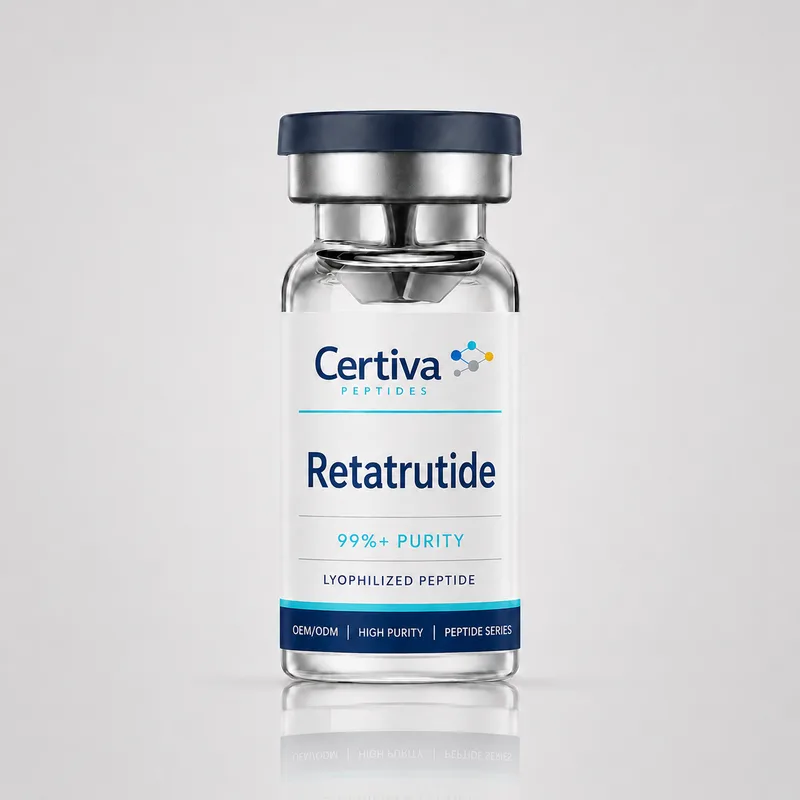
The human side-effect percentages come from Lilly’s investigational clinical program. Certiva Retatrutide is a lyophilized laboratory research reference, not the clinical-trial product and not a finished prescription medicine.
For research buyers, the relevant quality questions are:
- Which vial specification is being offered?
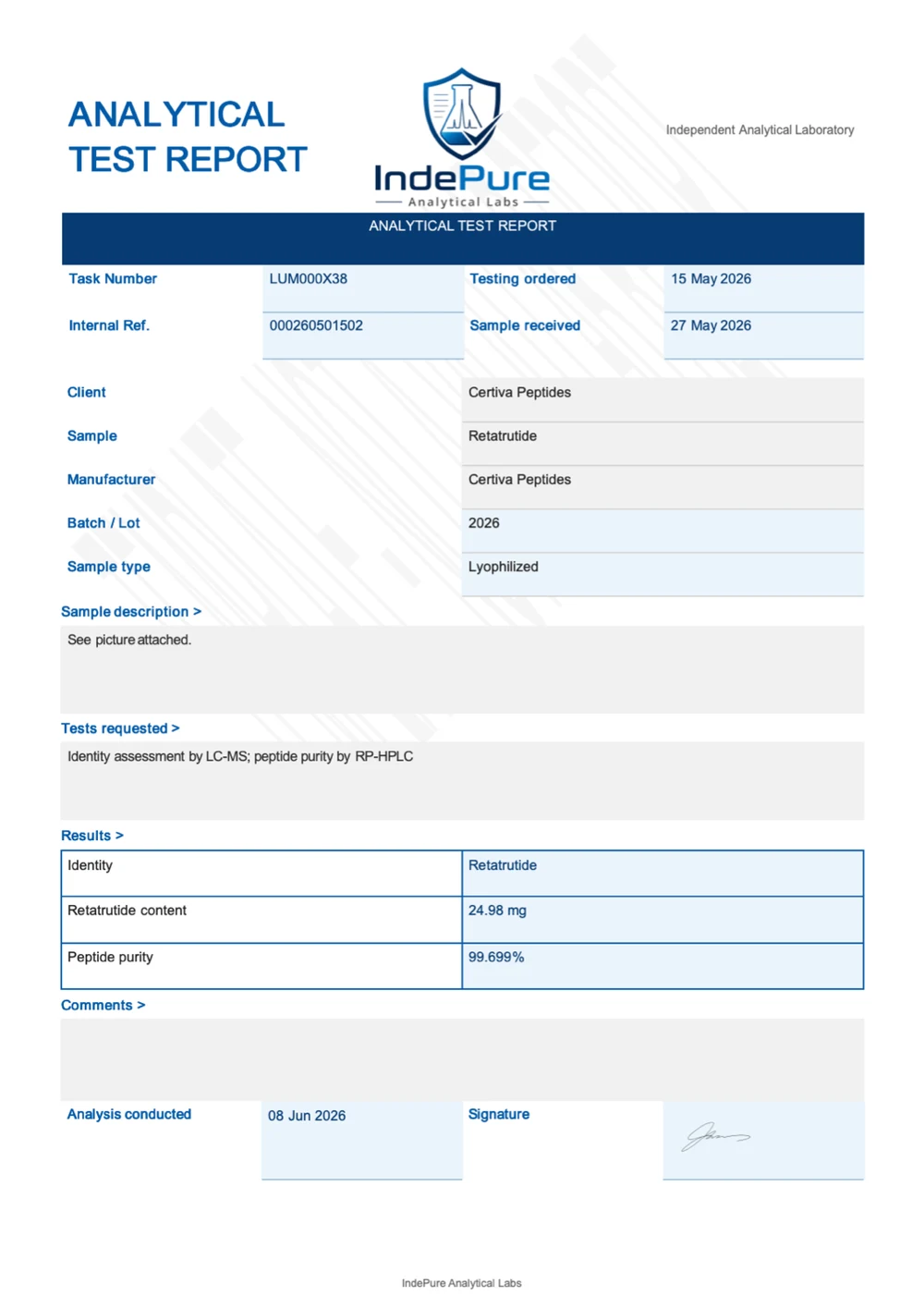
- Does the lot match the current COA?
- What HPLC purity and identity information is available?
- How is the material packaged and stored?
- What are the availability, bulk options, and lead time?
Certiva supplies Retatrutide in 5, 10, 15, 20, 30, 40, 50, and 60 mg vial specifications, with 10 vials per standard box.
What the Phase 3 safety picture shows
The most common retatrutide side effects are nausea, diarrhea, constipation, and vomiting—Phase 3 reports say most were mild to moderate.
TRIUMPH-1 gives the clearest current numbers. Digestive effects led the list, dysesthesia was a less familiar event worth watching, and most participants continued treatment.
Retatrutide remains investigational, but its Phase 3 safety story is now much clearer than it was one year ago.
Request Retatrutide specifications, the current COA, and a quote
For a Retatrutide research inquiry, specify the required vial format, batch-document expectations, quantity, and destination. Certiva can then confirm which current lot is available and provide the matching COA, lead time, and supply options.
View Retatrutide specifications · Read the latest Retatrutide Phase 3 results · Compare Retatrutide and Tirzepatide
Request the current Retatrutide COA + a quote →
Sources and further reading
- Lilly: TRIUMPH-1 Phase 3 results
- Lilly: TRIUMPH-2 and TRIUMPH-3 results
- ClinicalTrials.gov: TRIUMPH-1
Frequently asked questions
What are the most common retatrutide side effects?
The most common retatrutide side effects are nausea, diarrhea, constipation, and vomiting—Phase 3 reports say most were mild to moderate.
How common was nausea with retatrutide in TRIUMPH-1?
Nausea was reported by 28.6%, 38.4%, and 42.4% of participants in the 4 mg, 9 mg, and 12 mg groups, respectively, compared with 14.8% receiving placebo.
What is retatrutide dysesthesia?
Dysesthesia means an unusual or altered skin sensation, such as tingling, burning, sensitivity, or discomfort. It was reported by 5.1% to 12.5% across the three TRIUMPH-1 retatrutide groups and 0.9% receiving placebo.
Did most people stop taking retatrutide because of side effects?
No. Discontinuation because of adverse events was 4.1%, 6.9%, and 11.3% across the three TRIUMPH-1 retatrutide groups, compared with 4.9% receiving placebo. Most participants continued treatment.
Is retatrutide FDA approved?
No. Retatrutide remains investigational as of July 2026. It has completed several Phase 3 trials, but it does not yet have an FDA-approved prescribing label.
Can buyers request a Certiva Retatrutide COA?
Yes. Certiva publishes a 2026 batch report and accepts requests for the current applicable COA, vial specifications, availability, bulk options, lead time, and a destination-based quote.
For research use only. Not for human consumption. This article is educational and makes no medical, therapeutic, or dosing claims.
← More gLP-1 & weight management guides · Have a question? Start an inquiry →