


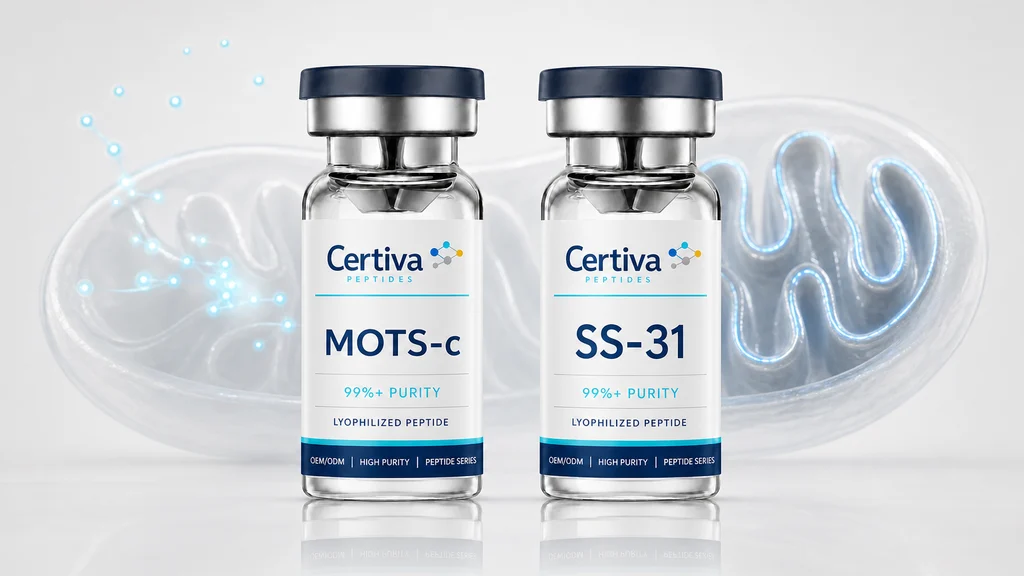
One peptide is a message written by mitochondria. The other is a four-amino-acid specialist designed to travel toward them.
That is why MOTS-c vs SS-31 is more interesting than a simple “which one is better?” contest.
MOTS-c is the metabolic-signaling peptide; SS-31 is the inner-mitochondrial-membrane peptide.
Both belong in mitochondrial research. They simply enter the story from different directions.
MOTS-c vs SS-31 at a glance
| Question | MOTS-c | SS-31 |
|---|---|---|
| What is it? | A 16-amino-acid mitochondrial-derived peptide | A synthetic four-amino-acid peptide |
| Main research theme | Metabolic signaling and AMPK | Inner membrane, cardiolipin, and bioenergetics |
| Simple picture | A message from mitochondria | A peptide that travels toward mitochondria |
| Other common name | MOTS-c | Elamipretide, MTP-131, or Bendavia |
| Same peptide? | No | No |
Think of mitochondria as tiny power stations inside cells. MOTS-c behaves more like a message sent from the station. SS-31 behaves more like a specialist that goes to the station’s inner machinery.
What is MOTS-c?
MOTS-c is short for mitochondrial open reading frame of the 12S rRNA-c. The name is difficult. The idea is not.
Mitochondrial DNA contains instructions for this 16-amino-acid peptide. That makes MOTS-c part of a small family called mitochondrial-derived peptides.
The discovery paper reported that MOTS-c affected metabolic homeostasis and insulin sensitivity in cells and mice. Its pathway involved the folate cycle, purine production, and activation of AMPK.
AMPK acts like a cell’s fuel gauge. When energy conditions change, AMPK helps the cell adjust how it uses and stores fuel. That is why MOTS-c appears in research about:
- mitochondrial communication;
- metabolic regulation;
- skeletal-muscle signaling;
- glucose handling;
- insulin sensitivity; and
- exercise physiology.
Read the original MOTS-c discovery paper on PubMed. The important boundary is that many headline findings came from cell and mouse models. The pathway is compelling, and it remains a research pathway.
What is SS-31?
SS-31 is a synthetic tetrapeptide, meaning it has only four amino-acid building blocks. It is also called elamipretide.
Its main target is much more physical than the MOTS-c story. SS-31 travels to mitochondria and associates with cardiolipin, a special fat found in the inner mitochondrial membrane.
Cardiolipin helps organize the folded inner membrane, called cristae, where much of the cell’s energy-making machinery sits.
One primary study showed high-affinity SS-31 binding to cardiolipin and reported protection of cristae structure plus faster ATP recovery in a rat kidney-injury model. Another laboratory study found that SS-31 interacted with cardiolipin-containing membranes and supported electron transport and ATP synthesis.
Read the PubMed papers on SS-31 and cardiolipin and SS-31, electron transport, and ATP synthesis.
That makes SS-31 the direct fit for inner-membrane, cardiolipin, cristae, and mitochondrial-bioenergetics research.
Which is better: MOTS-c or SS-31?
The better peptide is the one that matches the experiment.
- Choose MOTS-c for mitochondrial signaling, AMPK, metabolic-homeostasis, and exercise-physiology models.
- Choose SS-31 for cardiolipin, inner-membrane, cristae, electron-transport, and bioenergetics models.
- Choose both as separate references when the project compares mitochondrial signaling with direct inner-membrane targeting.
This is not a choice between “strong” and “weak.” It is closer to choosing between software and hardware.
MOTS-c is the signaling conversation. SS-31 is the membrane-machinery conversation.
Can MOTS-c and SS-31 be compared in one study?
Yes. In fact, their differences create the reason for the comparison.
A research design might compare:
- an endogenous mitochondrial-derived sequence with a synthetic targeted peptide;
- AMPK-linked signaling with cardiolipin-linked membrane effects;
- downstream metabolic responses with direct bioenergetic measurements; or
- separate single-peptide controls in the same model.
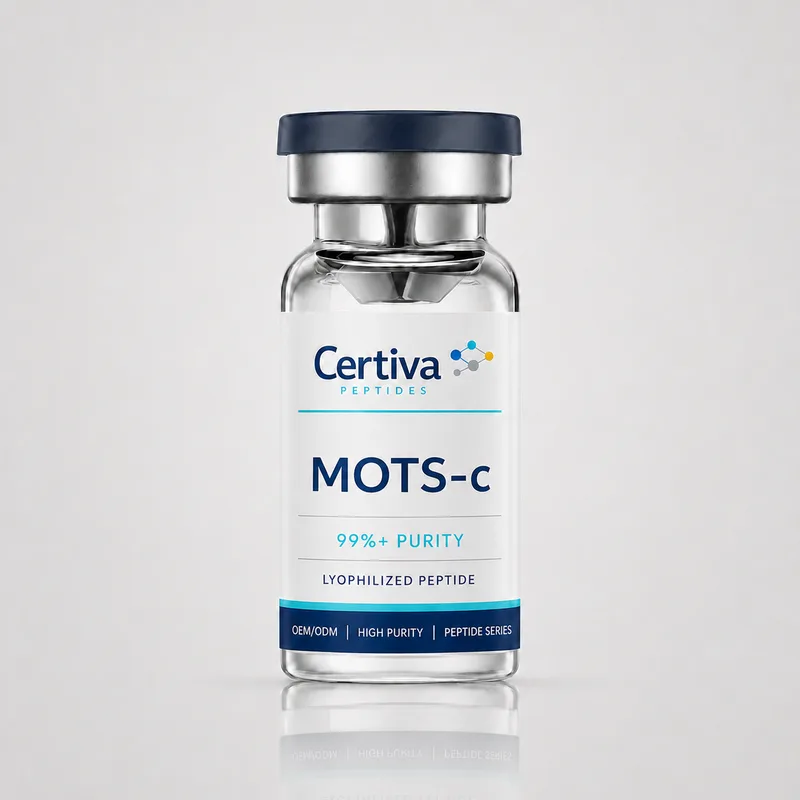
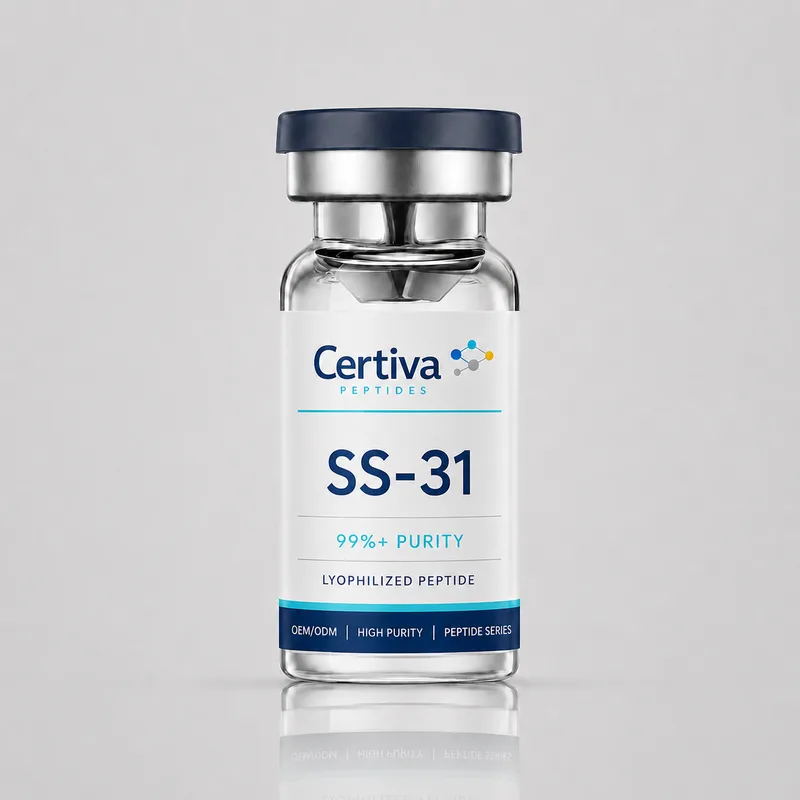
Certiva supplies MOTS-c and SS-31 as separate references. That keeps the amount of each peptide visible and gives the researcher control over the comparison.
What vial sizes are available?
Certiva’s stocked formats include:
- MOTS-c: 10 mg, 20 mg, and 40 mg per vial; and
- SS-31: 10 mg and 50 mg per vial.
Standard boxes contain 10 vials. Bulk and custom quantities are available by inquiry.
What should I check before ordering?
The word “mitochondrial” describes a research category. It does not prove a vial’s identity or purity.
Ask for:
- the full peptide name and any listed synonym;
- the vial strength and box quantity;
- the matching batch number;
- the HPLC purity result;
- mass-spectrometry identity information; and
- storage, shipping, and lead-time details.
Read our guide to HPLC vs mass spectrometry to see why buyers ask for both purity and identity evidence.
Two mitochondrial questions, two different peptides
MOTS-c helps researchers ask how mitochondria send metabolic signals. SS-31 helps them ask what happens at the inner mitochondrial membrane.
Choose MOTS-c for the message, SS-31 for the membrane, or separate vials of both for a clean side-by-side research design.
Both materials are strictly for laboratory research use only, not for human consumption.
Compare current MOTS-c and SS-31 COAs
Tell us which peptide, vial strength, box quantity, destination, and documentation you need. Certiva will reply with current availability, the applicable batch information, lead time, and a quote.
Compare MOTS-c and SS-31 COAs →
Sources and further reading
- PubMed: original MOTS-c metabolic-homeostasis study
- PubMed: SS-31 interaction with cardiolipin
- PubMed: SS-31, electron transport, and ATP synthesis
Frequently asked questions
What is the main difference between MOTS-c and SS-31?
MOTS-c is the metabolic-signaling peptide; SS-31 is the inner-mitochondrial-membrane peptide.
Is MOTS-c the same as SS-31?
No. MOTS-c is a 16-amino-acid mitochondrial-derived signaling peptide, while SS-31 is a synthetic four-amino-acid peptide that targets mitochondria and associates with cardiolipin.
Which is better, MOTS-c or SS-31?
MOTS-c is the clearer match for AMPK, metabolic-homeostasis, and mitochondrial-signaling studies. SS-31 is the clearer match for cardiolipin, inner-membrane, cristae, and bioenergetics research.
What is another name for SS-31?
SS-31 is also known as elamipretide, MTP-131, and Bendavia in scientific and clinical research.
Can I order MOTS-c and SS-31 from Certiva?
Yes. Certiva supplies MOTS-c in 10, 20, and 40 mg vials and SS-31 in 10 and 50 mg vials, with 10 vials per standard box.
For research use only. Not for human consumption. This article is educational and makes no medical, therapeutic, or dosing claims.
← More sourcing & supply guides · Have a question? Start an inquiry →