



Tirzepatide sends two appetite-related signals. The digestive system usually sends the first complaint back.
The most common tirzepatide side effects are nausea, diarrhea, vomiting, constipation, and stomach pain—most are digestive.
The good news is that the pattern is familiar, the current FDA label gives useful percentages, and the related Mounjaro label says many digestive reactions decreased over time.
See Certiva Tirzepatide specifications →
What should you know first?
The most common effects are digestive, especially while the dose is increasing.
Most common
Nausea and diarrhea
These led the common-reaction table across Zepbound's three listed doses.
What often changes
Digestive effects may ease
The Mounjaro label says many reports occurred during escalation and decreased over time.
Call for help
Severe or lasting symptoms
Persistent pain, vomiting, dehydration, or allergic-reaction signs need medical attention.
Tirzepatide side effects at a glance
The current Zepbound label pools two placebo-controlled adult weight-management trials:
| Side effect | 5 mg | 10 mg | 15 mg | Placebo |
|---|---|---|---|---|
| Nausea | 25% | 29% | 28% | 8% |
| Diarrhea | 19% | 21% | 23% | 8% |
| Vomiting | 8% | 11% | 13% | 2% |
| Constipation | 17% | 14% | 11% | 5% |
| Stomach pain | 9% | 9% | 10% | 5% |
| Indigestion | 9% | 9% | 10% | 4% |
| Injection-site reactions | 6% | 8% | 8% | 2% |
| Fatigue | 5% | 6% | 7% | 3% |
| Hair loss | 5% | 4% | 5% | 1% |
These numbers describe participants using the finished Zepbound medicine. They do not describe a Certiva laboratory reference material or predict one person’s experience.
See the current FDA-approved Zepbound label.
Why are most tirzepatide side effects digestive?
Tirzepatide activates two receptor systems:
- GIP;
- GLP-1.
Both are connected with the body’s response to food. GLP-1 signaling also slows gastric emptying, which means food moves out of the stomach more slowly.
That can help fullness last longer. It also helps explain:
- nausea;
- bloating or belching;
- indigestion;
- diarrhea;
- constipation; and
- vomiting.
The stomach is not an unrelated side story. It is part of how this category affects appetite and fullness.
For the easy receptor explanation, read why tirzepatide is a peptide with two signals.
When do tirzepatide side effects happen?
The current Mounjaro label says the majority of nausea, vomiting, and diarrhea reports occurred while the dose was being increased and decreased over time.
That creates an encouraging and practical pattern:
- digestive effects can be most noticeable during dose escalation;
- many reports become less frequent over time;
- the approved schedule is designed for gradual escalation;
- the prescribing healthcare professional should guide changes.
Do not change a finished medicine’s dose or schedule based on an article. The label and prescriber are the right sources for an individual treatment decision.
Is nausea the most common tirzepatide side effect?
Yes. Nausea appeared in 25% to 29% of participants across the three Zepbound doses in the pooled weight-management trial table.
Diarrhea followed at 19% to 23%.
The percentages do not rise in a perfectly straight line at every dose. Real clinical data is often like that. The useful pattern is broader: nausea and diarrhea were the most common, and digestive reactions caused most early discontinuations.
Across the three Zepbound doses, 4.8% to 6.7% of participants permanently stopped because of adverse reactions, compared with 3.4% receiving placebo.
Another useful way to read that result: more than nine out of ten participants did not permanently stop because of an adverse reaction.
Does tirzepatide cause constipation or diarrhea?
Both appeared in the label.
Diarrhea:
- 19% with 5 mg;
- 21% with 10 mg;
- 23% with 15 mg;
- 8% with placebo.
Constipation:
- 17% with 5 mg;
- 14% with 10 mg;
- 11% with 15 mg;
- 5% with placebo.
It may seem strange that the same medicine can be connected with opposite digestive complaints. Different people—and sometimes the same person at different times—can respond differently to changes in food intake, stomach emptying, hydration, and bowel movement.
Does tirzepatide cause hair loss?
Hair loss was reported by 4% to 5% of participants across the three listed Zepbound doses and 1% receiving placebo.
The label records what happened in the trials. It does not mean every person will lose hair.
Hair cycles can respond to major changes in weight, nutrition, stress, illness, and hormones. A healthcare professional can help evaluate the timing and other possible causes instead of assuming one explanation.
What serious warning signs matter?
Most reported side effects were not emergencies. Certain symptoms still deserve prompt attention.
Contact a healthcare professional for:
- severe stomach problems that do not improve;
- repeated vomiting, diarrhea, or signs of dehydration;
- persistent severe stomach pain, sometimes moving toward the back;
- upper-stomach pain, fever, yellow skin or eyes, or pale stools;
- major vision changes;
- serious allergic-reaction signs such as swelling or trouble breathing; or
- symptoms of very low blood sugar when tirzepatide is used with medicines that can cause hypoglycemia.
The Zepbound label also carries a boxed warning about thyroid C-cell tumors observed in rats and lists medical situations where the medicine should not be used. A licensed healthcare professional should interpret the complete current label for an individual.
What can make digestive effects easier to handle?
For a finished prescription medicine, follow the prescriber’s escalation plan. Do not speed up or change it independently.
General comfort guidance from healthcare teams may include:
- eating smaller meals;
- stopping at comfortable fullness;
- limiting foods that repeatedly worsen symptoms;
- keeping up with fluids; and
- contacting the care team before symptoms become severe.
This is general education, not personal medical advice.
Tirzepatide vs semaglutide side effects
Both medicines most often produce digestive effects.
In the completed SURMOUNT-5 head-to-head trial:
- any adverse event occurred in 76.7% with tirzepatide and 79.0% with semaglutide;
- 2.7% of tirzepatide participants stopped because of gastrointestinal effects;
- 5.6% of semaglutide participants stopped for the same reason.
That trial gives a useful same-protocol comparison: tirzepatide had fewer gastrointestinal-related treatment stops.
See the complete semaglutide vs tirzepatide comparison.
Tirzepatide medicine vs Certiva research material
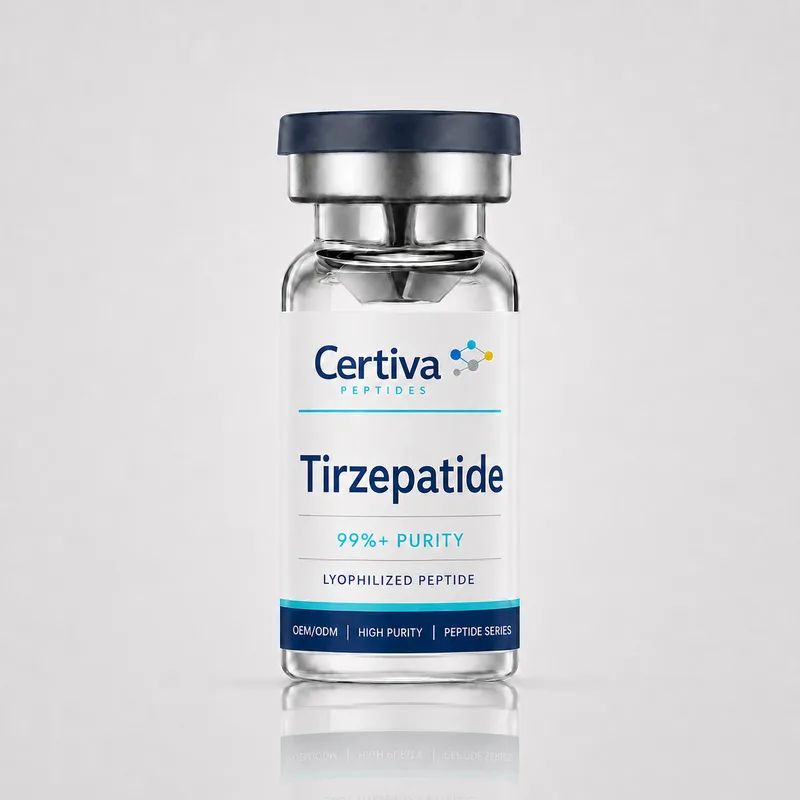
Zepbound and Mounjaro are finished FDA-approved medicines. Certiva Tirzepatide is a lyophilized laboratory research reference and is not for human consumption.
For research buyers, quality questions replace prescribing questions:
- Is the molecule and vial specification correct?
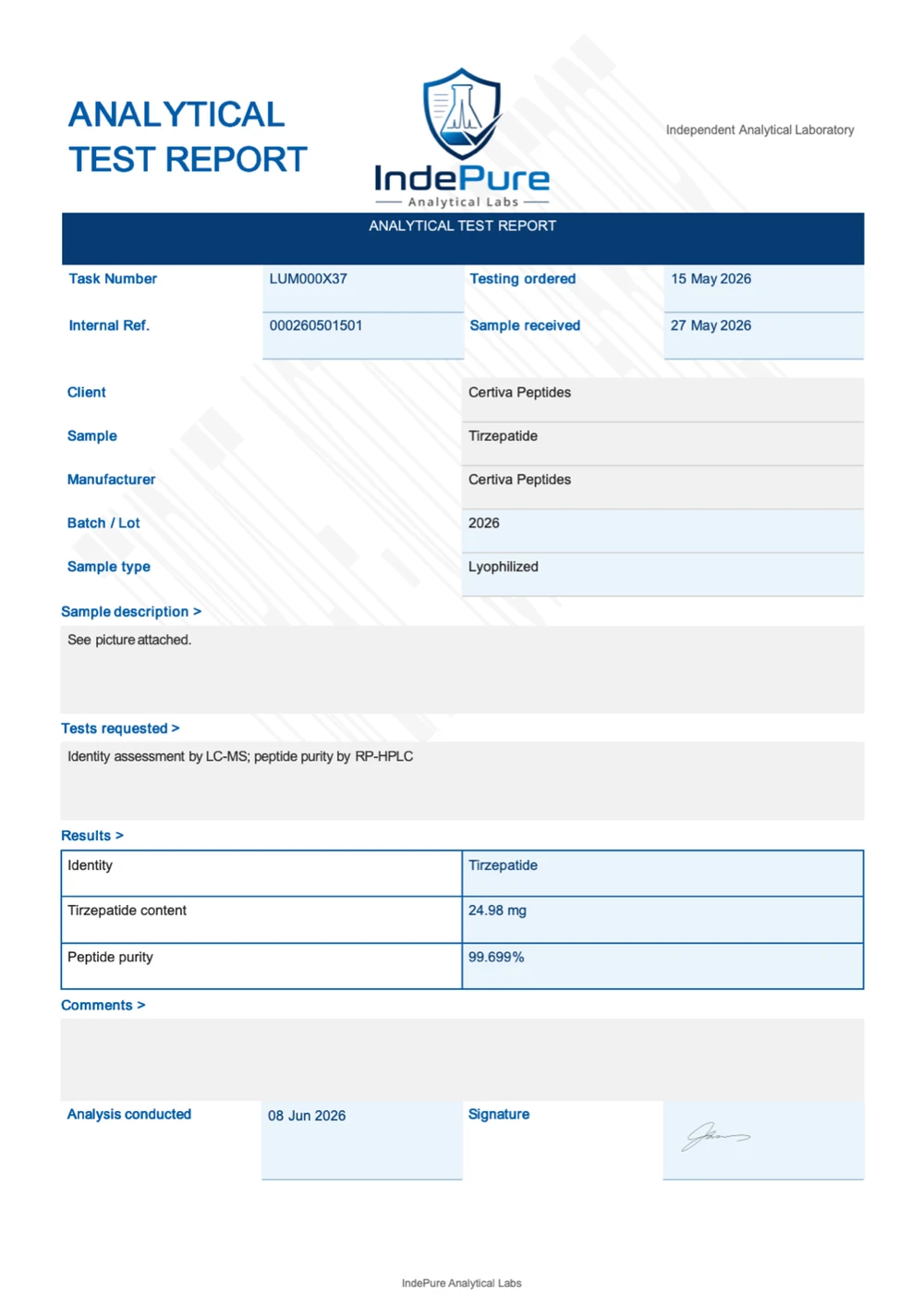
- Does the lot match the COA?
- What HPLC purity and identity information is available?
- How is the material packaged and stored?
- What are the availability, bulk options, and lead time?
Certiva supplies Tirzepatide from 5 mg to 120 mg per vial, with 10 vials per standard box.
What to expect and what needs attention
The most common tirzepatide side effects are nausea, diarrhea, vomiting, constipation, and stomach pain—most are digestive.
Nausea leads the list. Diarrhea is next. The current labels also give consumers an encouraging timing clue: many nausea, vomiting, and diarrhea reports occurred during dose escalation and decreased over time.
Severe, persistent, or worrying symptoms still need medical attention.
Request Tirzepatide specifications, the current COA, and a quote
For Tirzepatide sourcing, identify the vial specification, order volume, destination, and the tests your team expects to review. Certiva can match the inquiry to an available batch and return its documentation, supply format, and delivery timeline.
View Tirzepatide specifications · Compare Tirzepatide and Retatrutide · See Certiva quality standards
Request the current Tirzepatide COA + a quote →
Sources and further reading
- FDA: current Zepbound prescribing information
- DailyMed: current Mounjaro prescribing information
- New England Journal of Medicine: SURMOUNT-5
Frequently asked questions
What are the most common tirzepatide side effects?
The most common tirzepatide side effects are nausea, diarrhea, vomiting, constipation, and stomach pain—most are digestive.
How common is nausea with tirzepatide?
In the current Zepbound label's pooled weight-management trials, nausea was reported by 25% to 29% of participants across the three listed tirzepatide doses, compared with 8% receiving placebo.
Do tirzepatide side effects improve over time?
The current Mounjaro label says most nausea, vomiting, and diarrhea reports happened during dose escalation and decreased over time.
Does tirzepatide cause hair loss?
Hair loss was reported by 4% to 5% of Zepbound participants across the three listed doses and 1% receiving placebo in the current label's pooled trial table.
When should someone call a healthcare professional?
Contact a healthcare professional for severe or persistent symptoms. Urgent warning signs include severe stomach pain that does not go away, repeated vomiting or dehydration, serious allergic-reaction symptoms, yellowing of the skin or eyes, or major vision changes.
Is Certiva Tirzepatide the same as Zepbound or Mounjaro?
No. Certiva supplies a lyophilized tirzepatide research reference for laboratory use. Zepbound and Mounjaro are finished FDA-approved prescription medicines containing tirzepatide.
For research use only. Not for human consumption. This article is educational and makes no medical, therapeutic, or dosing claims.
← More gLP-1 & weight management guides · Have a question? Start an inquiry →